Jewelry Sourcing Guide
📅 April 3, 2026
Supporting detail: actual product dimensions, contact-material requirements.
A diamond ring in a plastic bag isn't a diamond ring—it's a liability. But when you start searching for a custom jewelry packaging boxes manufacturer, you'll find thousands of results. Most of these aren't actually factories; they're "middlemen" or resellers who mark up prices and slow down communication.
Working directly with a manufacturer in China, like LuxoPacks, gives you three things you can't get elsewhere: direct pricing, custom technical engineering, and total control over your material specs. This guide will show you how to spot a real factory and what specific "jewelry-safe" requirements you should be asking for in 2026.
The Red Flags: How to Spot a Reseller
Establish who controls the operations relevant to the proposed jewelry box. A trading partner is not automatically unsuitable, and a machine photo does not prove factory ownership. Ask for the production route, responsibility for material selection, sample approval and how an insert or lining problem would be corrected.
- Generic Samples: If they only show "stock" designs and struggle to explain how a custom die is made, they probably don't own the machinery.
- Unclear Technical Answers: Ask the supplier to confirm the liner specification and show the relevant material record. Time taken to check a technical answer does not establish whether the supplier manufactures the product.
- No Certification: Ask for their ISO 9001 or FSC certification. A real factory will have these in their own company name. A reseller will have a mix of certificates from different sources.
Pro Tip: Ask for a live factory video tour or a "Production Line Photo" with your name written on a piece of paper in the frame. A real manufacturer like LuxoPacks will do this instantly.
Jewelry-Specific Needs: Beyond the Box
Map the jewelry’s vulnerable features before choosing its display position. A ring setting, pendant surface and necklace clasp create different contact and restraint needs. An attractive fabric or tight cavity can still catch the piece, press on a setting or make removal awkward.
1. Anti-Tarnish Linings
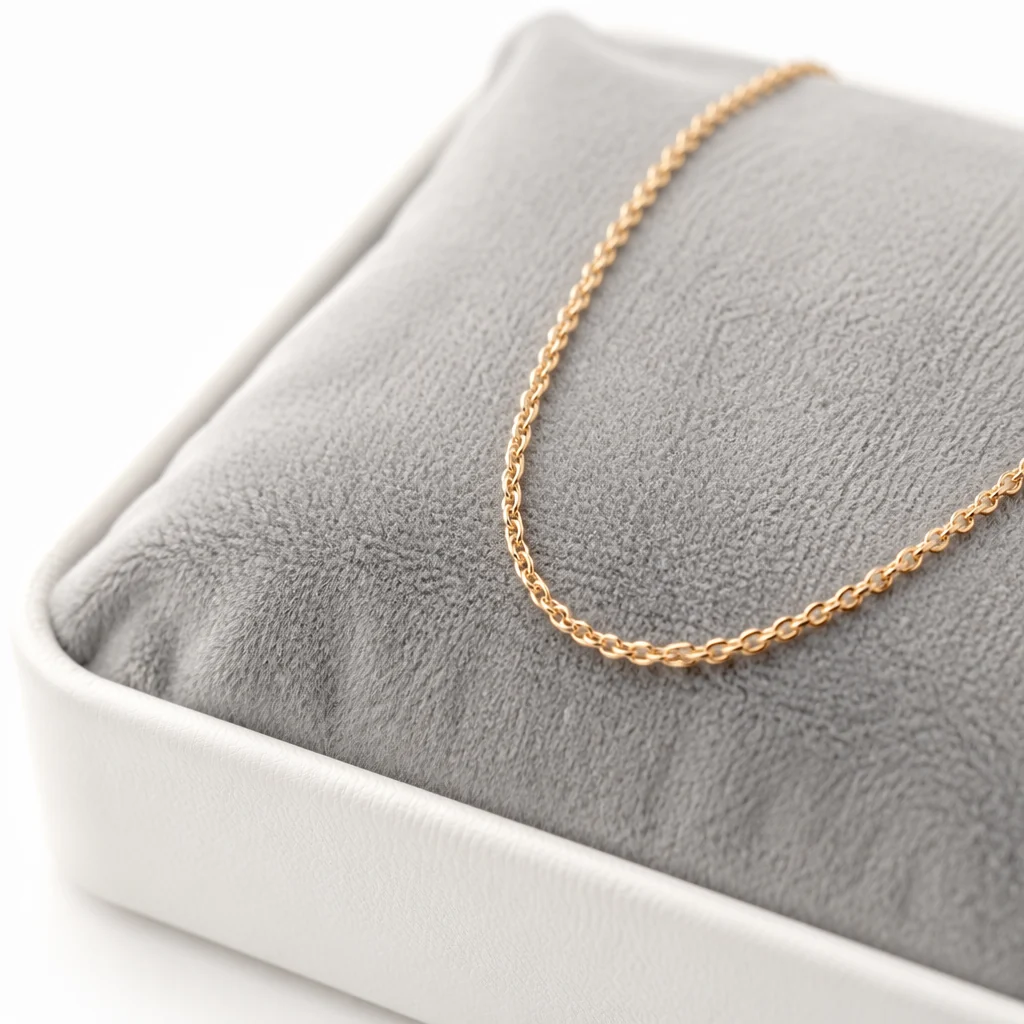
A lining’s feel or appearance does not establish compatibility with a jewelry finish. Where tarnish protection is required, identify the contact material and adhesive and agree the relevant evidence and evaluation for the actual piece. Do not infer years of protection from a fabric name.
2. Secure Compartments
A jewelry box is a travel case. Whether you need ring slots, necklace hooks with a pouch, or bracelet elastics, the "insert" is critical. We recommend high-density EVA foam covered in velvet. It's soft enough to prevent scratches but firm enough to hold the weight of heavy gold chains during shipping.
3. The "Snap" Factor
Review the closure on a loaded sample. It should align and open comfortably without dislodging the jewelry. Specify the intended opening behavior and its acceptance criteria; one magnet grade or a particular closing sound is not a universal quality requirement.
Top Box Styles for Jewelry Brands
There are three main styles that dominate the luxury jewelry market today:
1. The Magnetic Rigid Box
The most popular for high-end fashion jewelry and boutiques. It's sleek, easy to stack, and the flat surfaces are perfect for gold foil logos. Best for necklaces and large earrings.
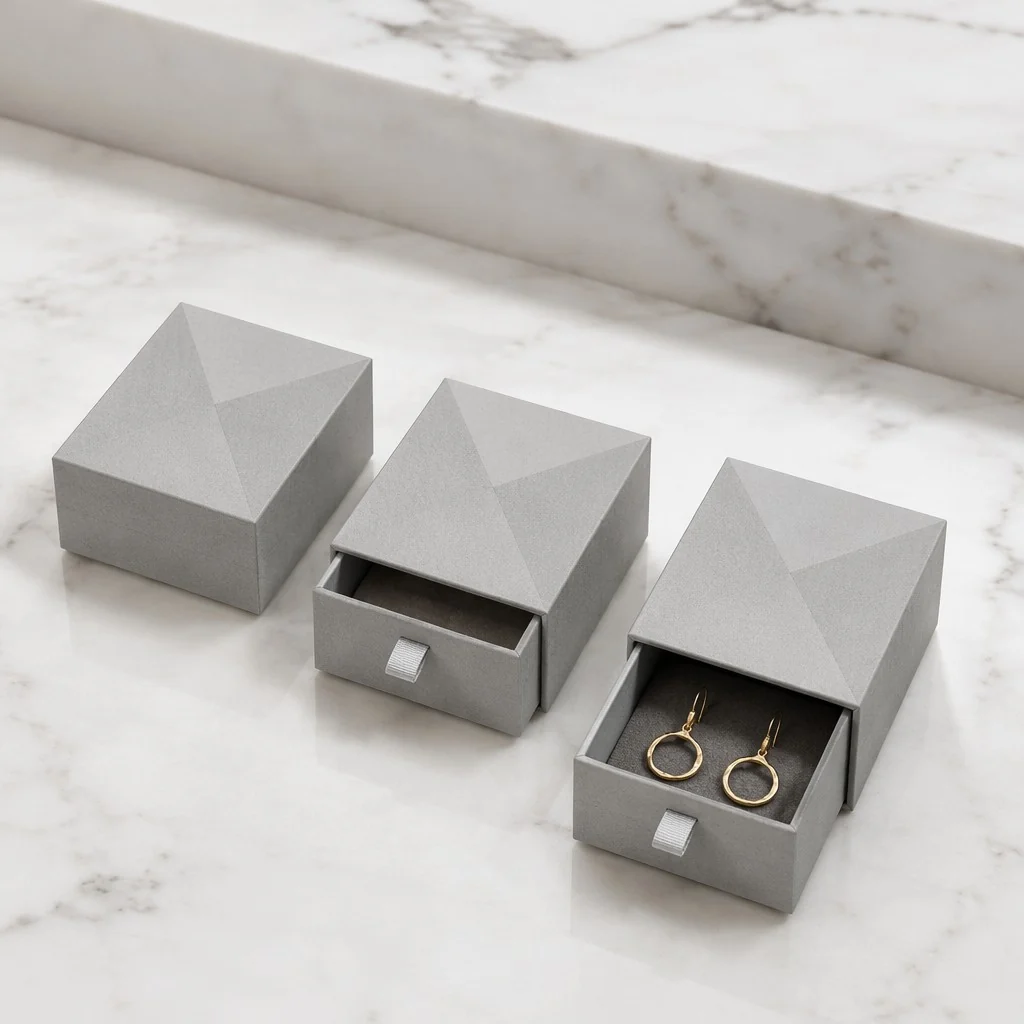
2. The Sliding Drawer (Matchbox)
A modern favorite for "minimalist" brands. Often paired with a ribbon pull. It feels more like a "gift" and is highly reusable for the customer.
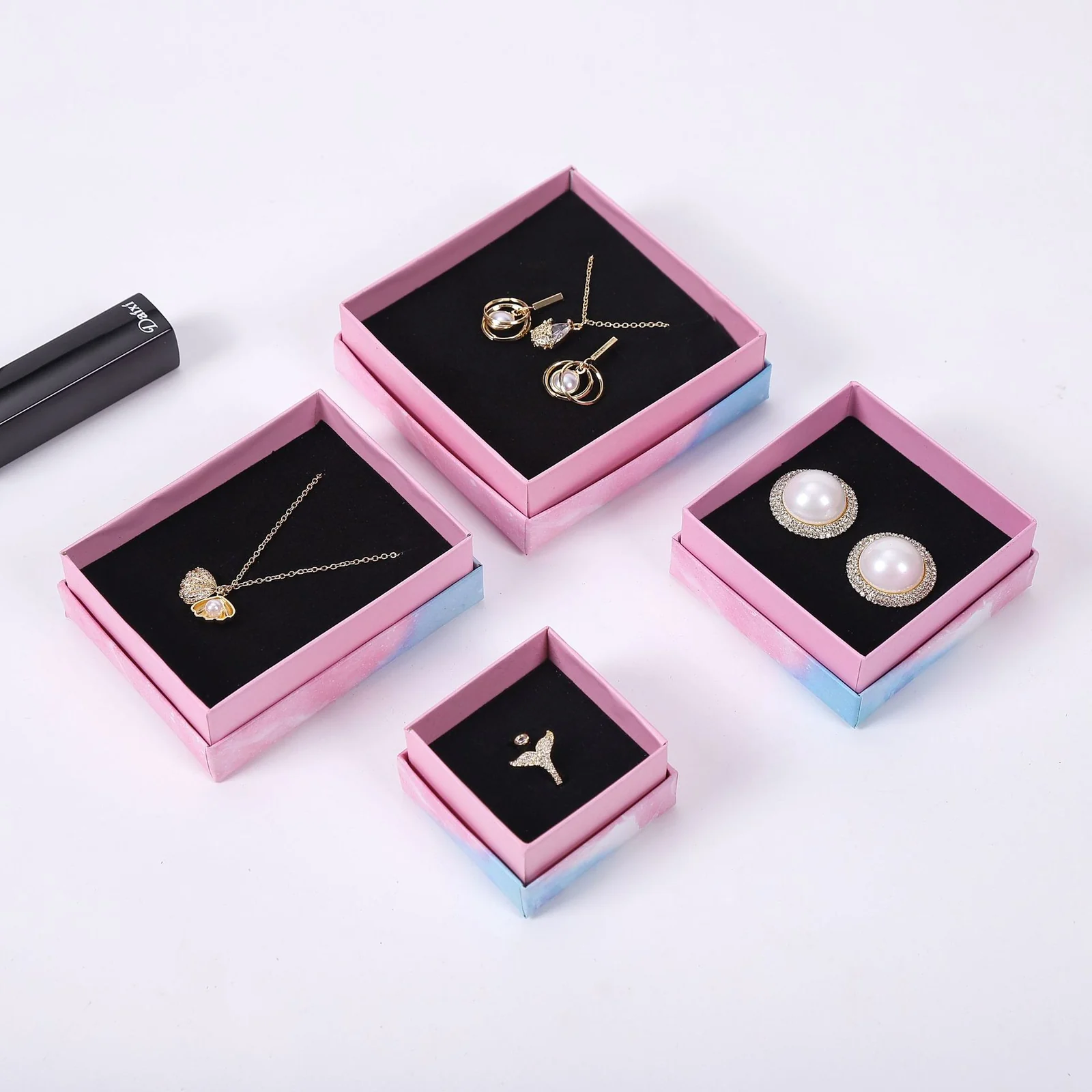
3. The Two-Piece Rigid Box (Lid and Base)
Classic, timeless, and very protective. It's the standard for high-jewelry (engagement rings, fine diamonds). It provides a full "unveiling" experience when the lid is lifted.
Key Specs Checklist for Your Quote
When you contact a jewelry packaging manufacturer, copy and paste this list to get an accurate quote:
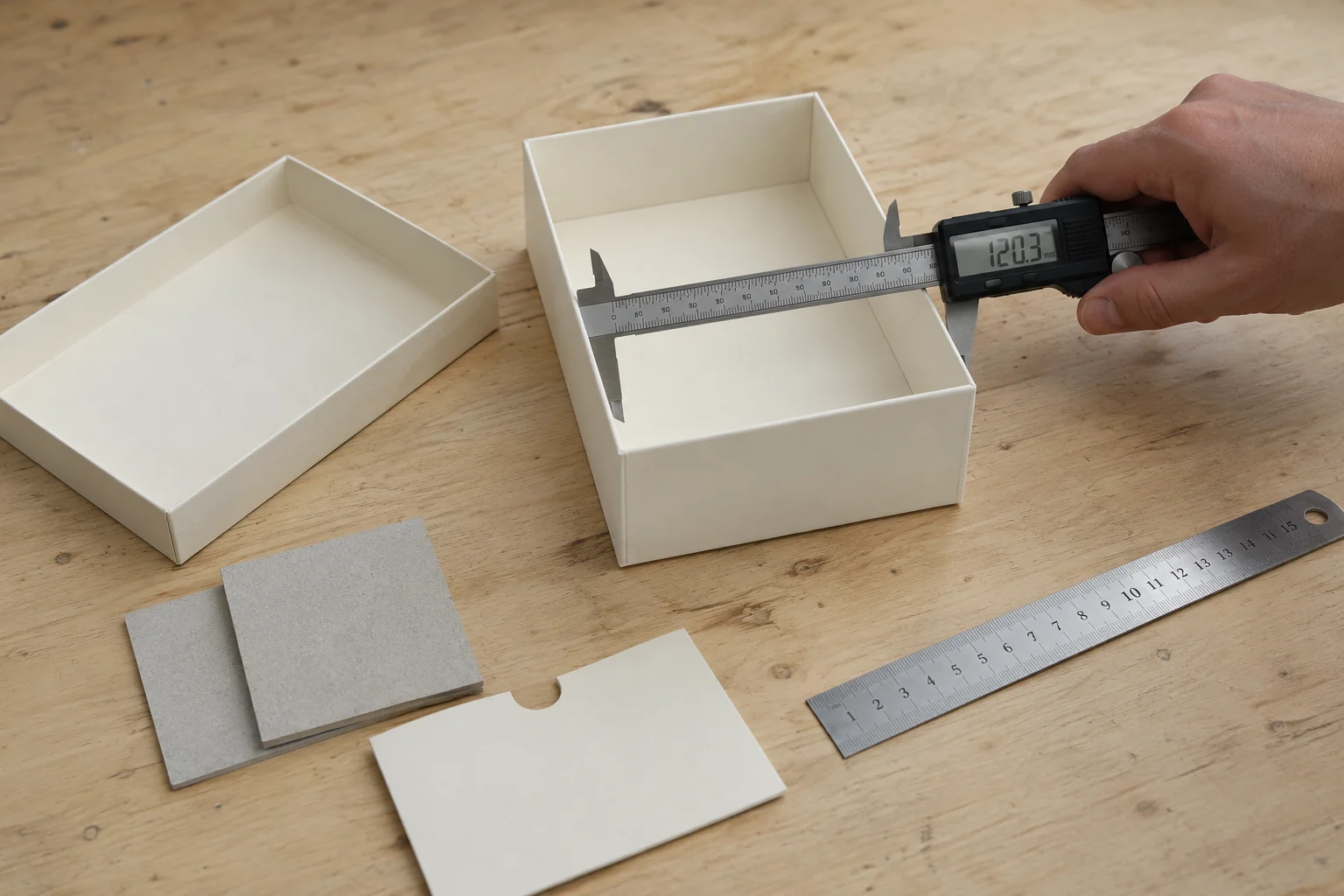
- Internal Dimensions: e.g., 90x90x40mm (Necklace), 50x50x40mm (Ring).
- Material: 1500g Greyboard + 157g Art Paper.
- Lining: Identify the contact fabric and insert material; request evidence where tarnish protection is required.
- Finishing: Soft-touch lamination + Gold Foil Stamp on lid.
- Closure: State the intended magnetic or hinged opening and approve the loaded closing action.
- Quantity: e.g., 500 pcs per size.
Why LuxoPacks is the Preferred Factory Partner
LuxoPacks manufactures custom jewelry packaging in Dongguan, Guangdong. Specify the outer wrap, insert and contact lining for the actual jewelry. If the brief requires FSC sourcing, a chemical restriction or anti-tarnish performance, agree the relevant documentation and evaluation before approving the materials.
Design Your Custom Jewelry Boxes Today
Request a factory quotation and design support for your jewelry packaging. Production starts at 500 pcs per size and design; agree the design schedule after the product and artwork requirements are reviewed.
Frequently Asked Questions
What are the best materials for custom jewelry boxes?
Select the core, wrap, insert and contact lining for the actual jewelry and delivery brief. Confirm board grade and measured construction rather than prescribing one minimum thickness for every piece. Test retention and removal, and assess any anti-tarnish claim separately.
How can I tell if I'm buying from a factory or a reseller?
Identify the contracting entity and production site, ask which operations are performed there and request evidence relevant to the proposed materials. Verify any claimed certificate against its holder and scope. Compare suppliers on the approved sample and technical answers rather than assuming the sales model determines quality.
Can you provide anti-tarnish inserts for silver jewelry?
Include the jewelry material, finish and required protection in the brief. The proposed contact lining and any anti-tarnish claim need material identification and relevant supporting evaluation. A velvet or microfiber description alone is not confirmation of that performance.
Put this guide into practice
Approve the jewelry, insert and contact lining together. If tarnish prevention is required, identify the material and relevant evaluation rather than accepting an appearance-based promise of protection.