


Custom Packaging Materials
Packaging material affects strength, weight, print result, surface feel, finishing effect, cost, shipping volume and sustainability direction.
- ✓ Free Design Support & 3D Mockup
- ✓ Specialty Materials
- ✓ Insert Material Choices
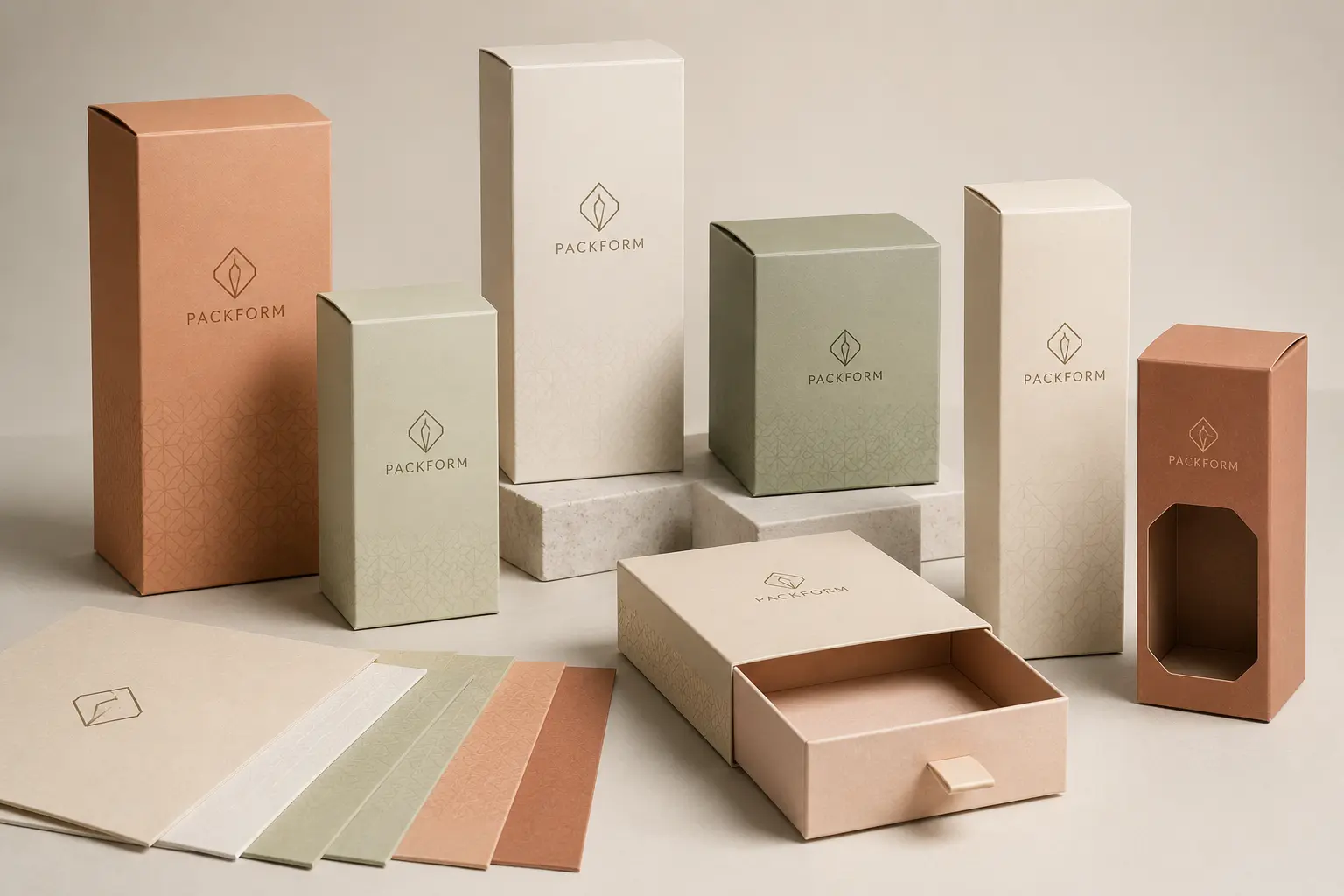
Why Material Choice Matters
Many buyers start with the visual effect. Appearance matters, but material also affects structure, product protection, printing, finishing, carton packing and shipping cost.
The wrong material can create problems such as weak structure for a heavy product, box deformation during handling, poor color result on the selected paper surface, foil stamping that does not hold clearly, paper bag handles that feel too light, inserts that do not support the product, higher shipping weight or carton volume than expected, and packaging that does not match sustainability or document requirements.
Material should be reviewed together with logo printing options, foil stamping and custom packaging inserts, because paper surface, board thickness and product support can change the final result.
The best material choice starts with product size, product weight, fragility, packaging use, shipping method and brand presentation needs.
Common Paper Packaging Materials
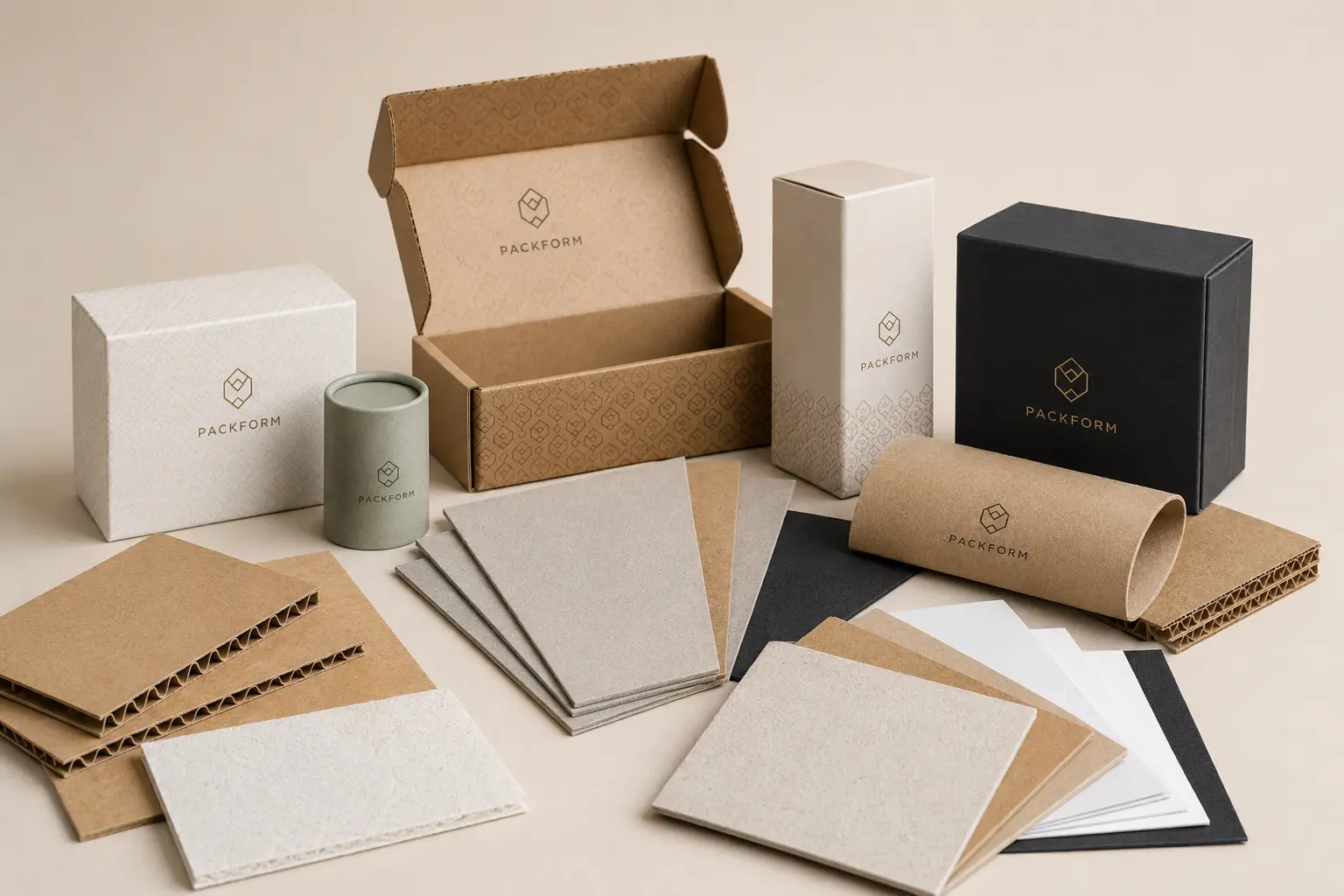
LuxoPacks helps buyers review paperboard, greyboard, corrugated board, kraft paper, coated paper, specialty paper, paper bag materials, paper tube materials and insert materials based on the product and use case.
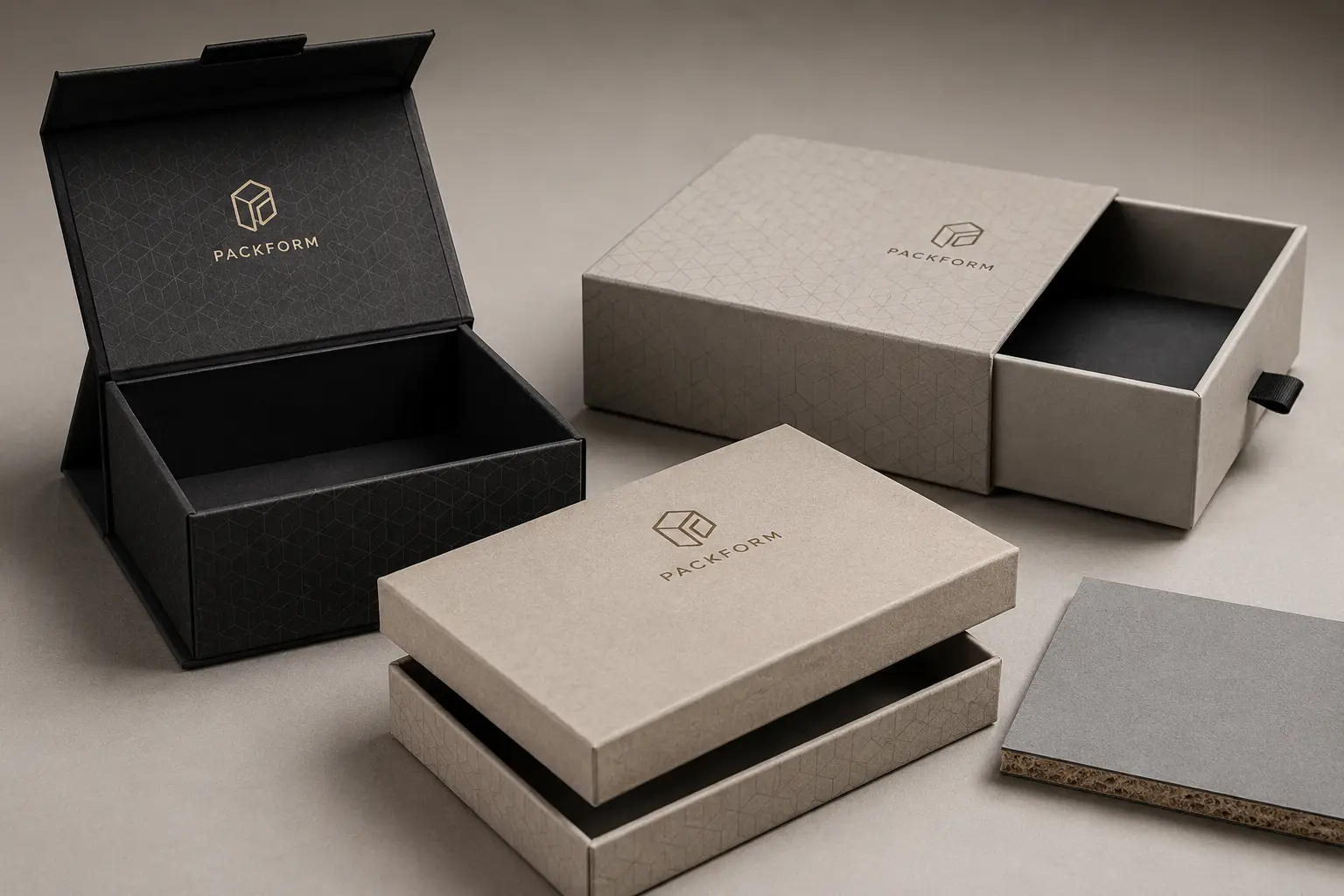
Paperboard
Paperboard is widely used for folding cartons, sleeves, lightweight boxes, cosmetic cartons, skincare packaging, retail product boxes and inner packaging.
- Lightweight retail products
- Cosmetic products
- Skincare bottles
- Product sleeves and inner cartons
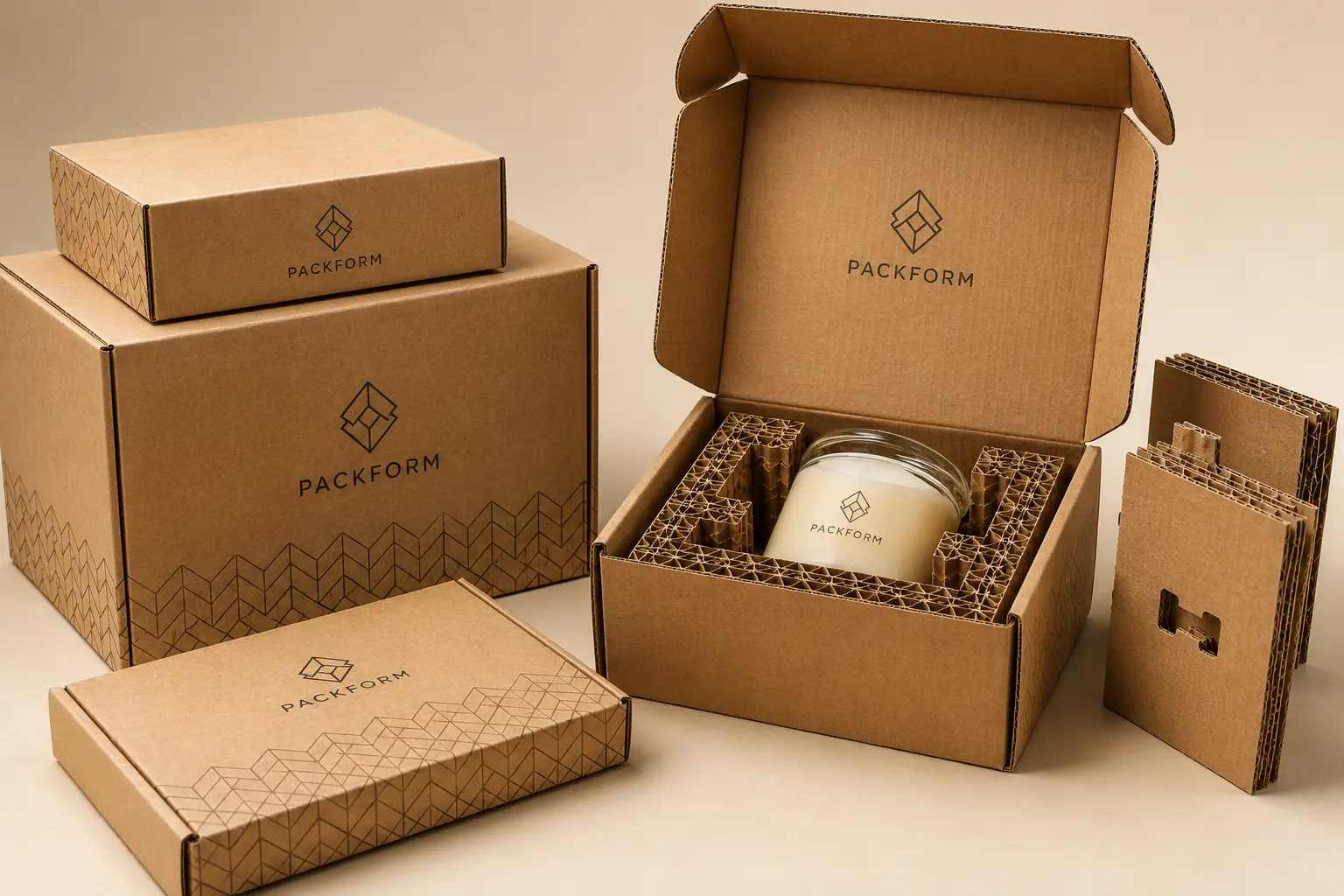
Greyboard
Greyboard is the structural board inside many rigid boxes, magnetic closure boxes, drawer boxes, lid and base boxes and gift boxes.
- Box strength and box weight
- Lid fit and drawer movement
- Corner shape and opening experience
- Shipping cost and carton volume
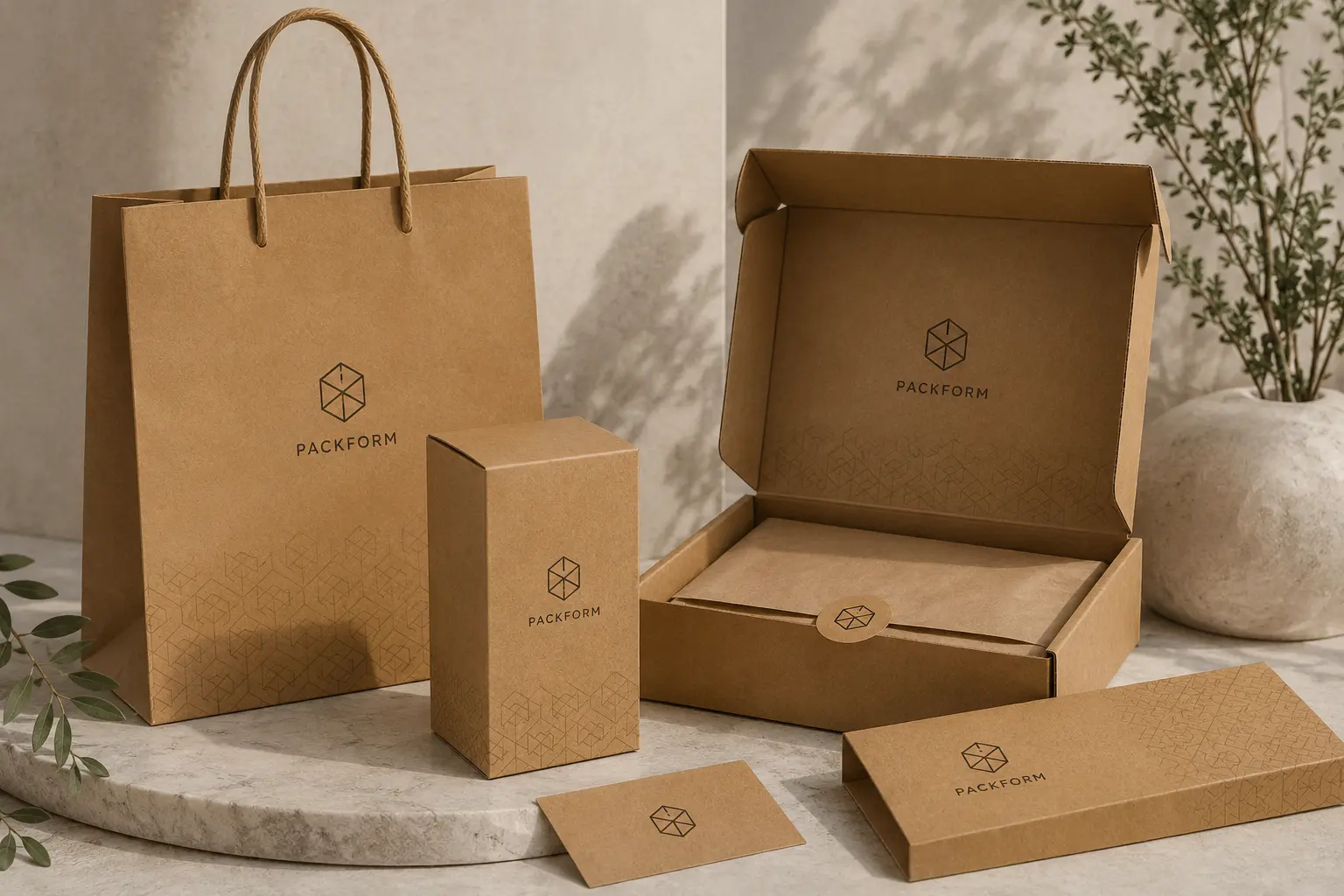
Corrugated Board
Corrugated board is used for mailer boxes, shipping cartons, protective packaging and some display packaging.
- Ecommerce mailer boxes
- Shipping cartons
- Candle jar protection
- Outer cartons and protective inserts
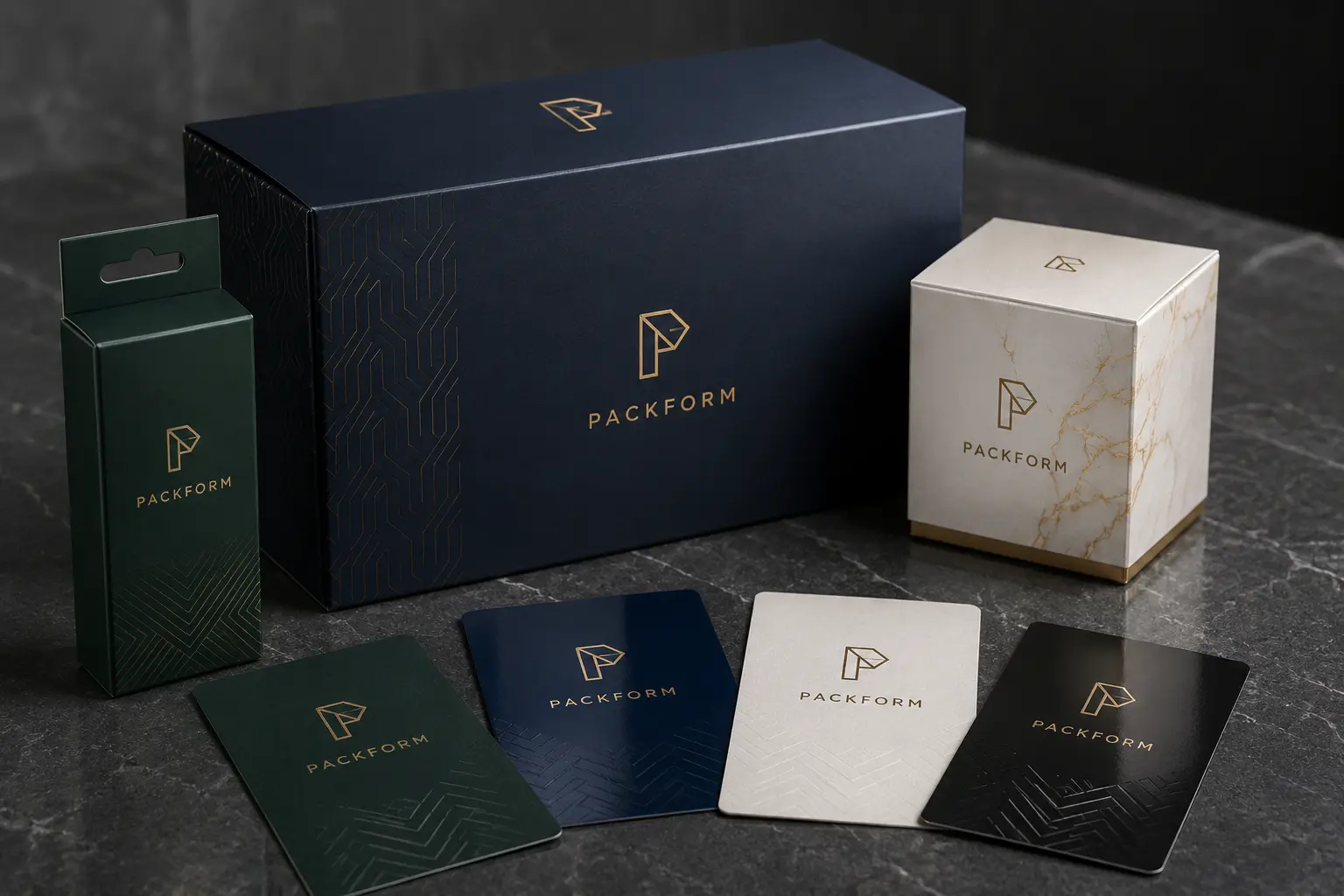
Kraft Paper
Kraft paper is often chosen for natural, simple or paper-based packaging styles. It can be used for paper bags, folding cartons, mailer boxes, sleeves and some inserts.
Kraft paper does not print like bright white coated paper. Colors may appear darker or more muted.
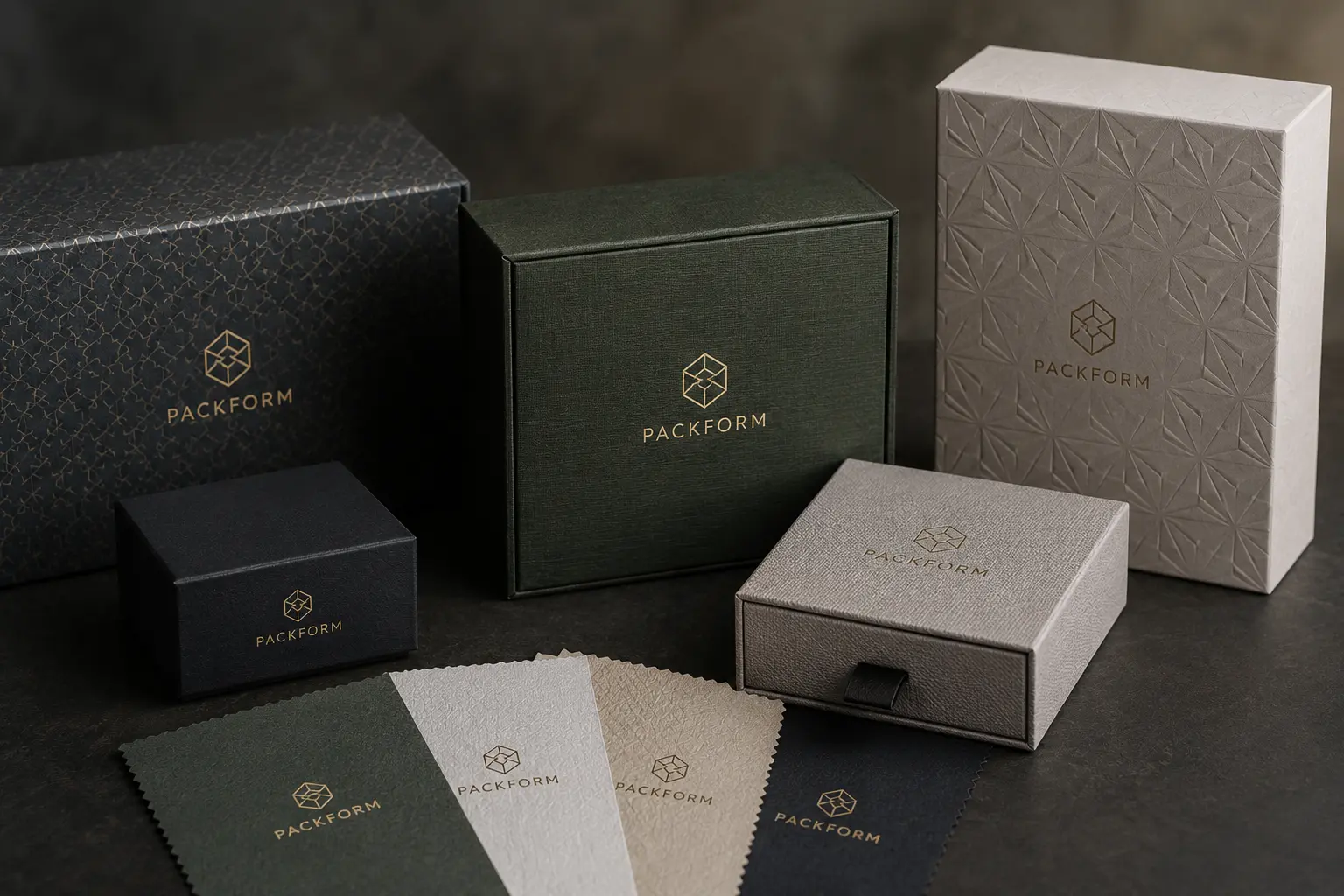
Coated Paper and Art Paper
Coated paper and art paper are often used when a project needs clean printing, smooth color and controlled visual results.
- Full-color printing
- Sharp logo printing
- Matte or gloss lamination
- Spot UV and foil stamping when suitable
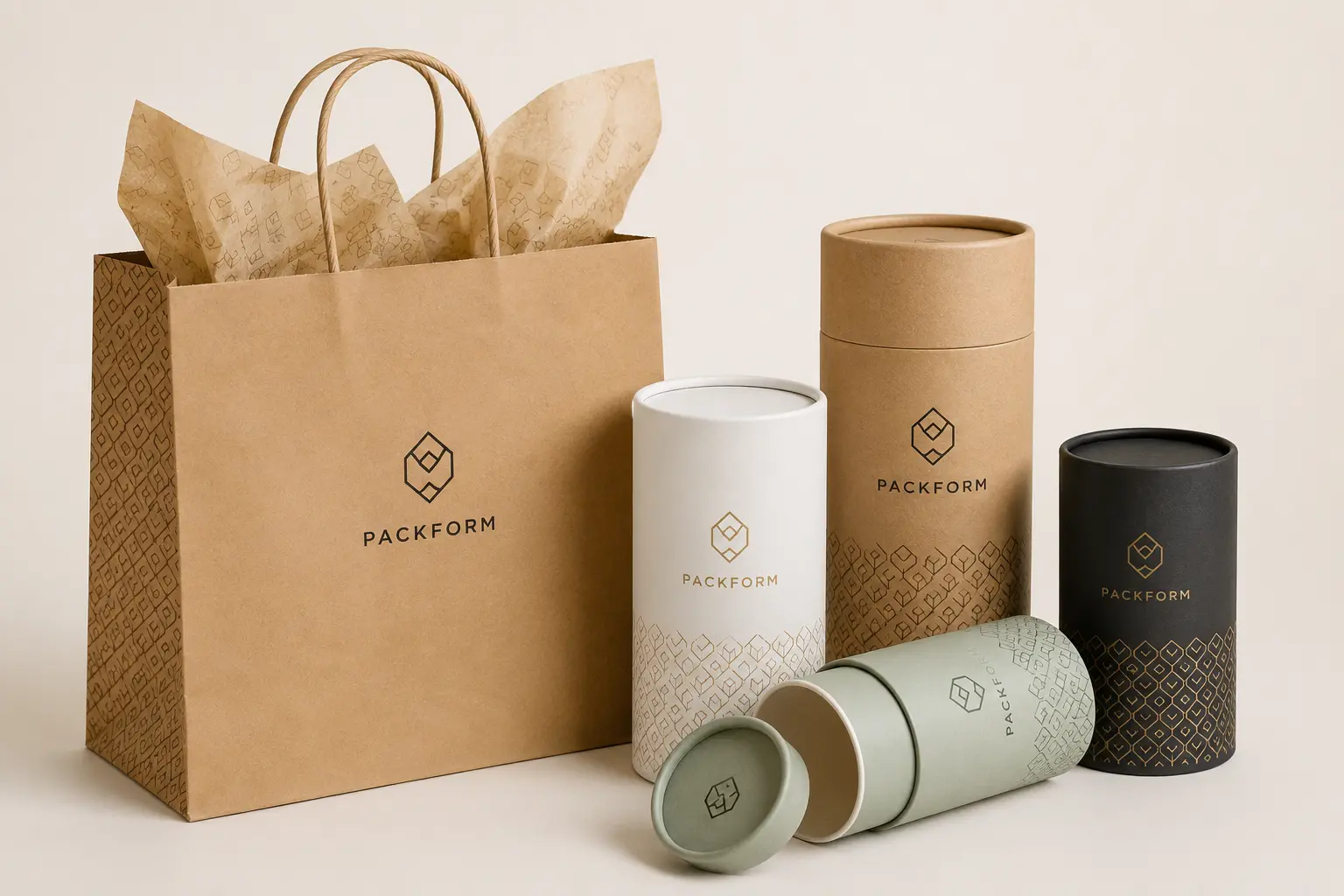
Specialty Paper
Specialty paper can add texture, color, pattern or tactile quality to packaging. It is often used for rigid boxes, jewelry packaging, perfume boxes, watch boxes and gift packaging.
If a specialty paper is important to the brand, review it with a physical sample rather than relying only on screen images.
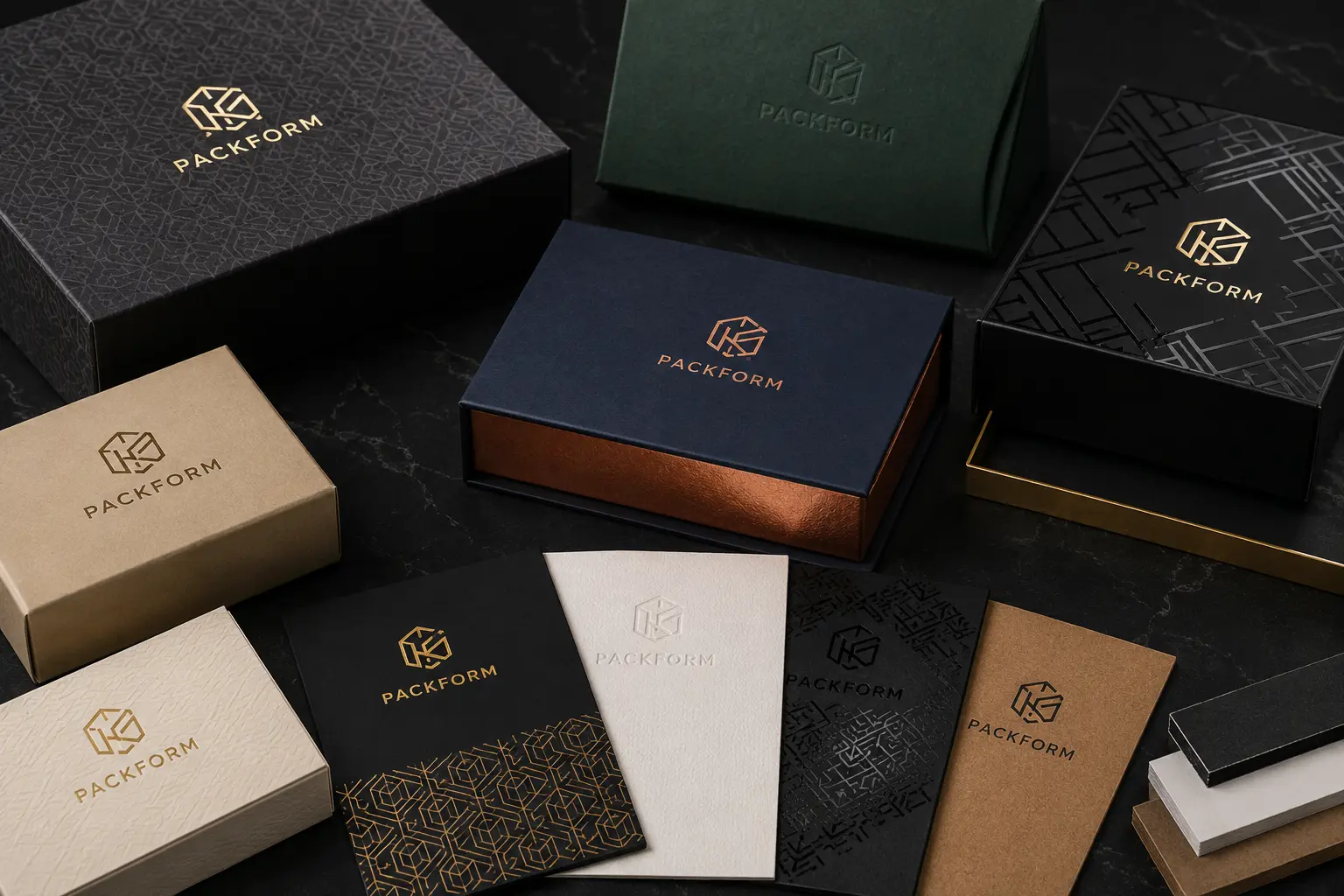
Paper Bag and Paper Tube Materials
Custom paper bags need material that works for both appearance and carrying strength. The paper should match product weight, bag size and handle type.
- Paper weight
- Kraft or white paper
- Coated or uncoated surface
- Bottom reinforcement
- Handle material and handle fixing method
- Lamination if needed
- Print coverage
Paper tubes are used for candles, cosmetics, tea, gifts and cylindrical products. Material selection affects tube wall strength, lid fit, surface finish and label or print result.
- Tube wall thickness
- Inner diameter
- Outer wrapping paper
- Lid material and bottom structure
- Inner support and label compatibility
Insert Materials
Insert material affects how the product sits inside the package. The right insert depends on product weight, fragility, shape, display angle and shipping risk.
Paper Inserts
Paper card inserts, corrugated inserts and paperboard dividers are useful when buyers want a paper-based direction.
Foam and EVA
Foam or EVA may be needed when products are fragile, heavy or need stronger cushioning during shipping.
Molded Pulp
Molded pulp can be considered for some projects depending on shape, quantity and fit requirements.
Soft Padding
Fabric-covered inserts, sponge or soft padding can be used when the presentation surface and product protection both matter.
The insert should be tested with the product during sampling whenever possible. Insert height, side gap and product removal space are as important as the outer box.
Thickness, Printing and Finishing Compatibility
More thickness is not always better. Buyers often ask for thicker paper because they want packaging to feel more substantial, but thickness also changes production and shipping.
- Strength
- Folding behavior
- Box weight
- Cost
- Shipping cost
- Corner quality
- Lid fit
- Assembly difficulty
- Storage volume
The same artwork can look different on coated paper, kraft paper, uncoated paper, dark paper and textured paper, so material and printing should be reviewed together.
Material and Sustainability
If sustainability is important, material should be discussed before the structure is finalized.
For paper-based goals, compare this page with sustainable paper packaging options and structure choices for custom packaging boxes.
- Can the structure use less material?
- Can the insert be paper-based?
- Is lamination necessary?
- Are recyclable paper directions available?
- Are material documents required?
Material and Cost
Material affects cost, but the total packaging cost also includes printing, finishing, forming, inserts, packing and shipping.
- Material type and paper thickness
- Special paper availability
- Print coverage and finishing process
- Insert material and waste during production
- Order quantity and packing method
Safety and Documents
Material choice should consider whether the packaging touches the product directly or only works as outer packaging.
- Does the material touch the product directly?
- Is the product cosmetic, skincare or food-adjacent?
- Are there retailer or market requirements?
- Are material documents needed?
How to Choose a Material
A practical material decision can follow this order:
- Confirm product size and weight.
- Choose the packaging structure.
- Decide whether the package is for retail, gift, shipping or display.
- Review product protection needs.
- Select paper or board type.
- Choose insert material if needed.
- Check printing and finishing compatibility.
- Review cost and shipping weight.
- Confirm sustainability or document requirements.
- Make a sample for review.
What to Send for Material Suggestions
To get material suggestions, send:
- Product size
- Product weight
- Product photos
- Packaging type
- Quantity
- Brand style
- Reference packaging
- Printing needs
- Finishing ideas
- Insert requirement
- Sustainability goals
- Delivery country
- Target budget if available
If you already have a material sample you like, send photos or describe the texture, color and thickness. If you need documents or specific material requirements, mention them before sampling.
Ready to Create Your Custom Packaging?
Send your product photos, size, quantity, box type, logo artwork, material request, and target delivery date. We will help review the details before quoting.
Get a Packaging QuoteFrequently Asked Questions
Answers for custom packaging quotes, samples, MOQ and production timing.