


Foil Stamping for Custom Packaging
Foil stamping adds metallic, matte, glossy or colored details to packaging, but the final result depends on foil color, paper surface, logo size, line thickness, stamping position and sample approval.
- ✓ Free Design Support & 3D Mockup
- ✓ Metallic Color Options
- ✓ Sharp Detail Check
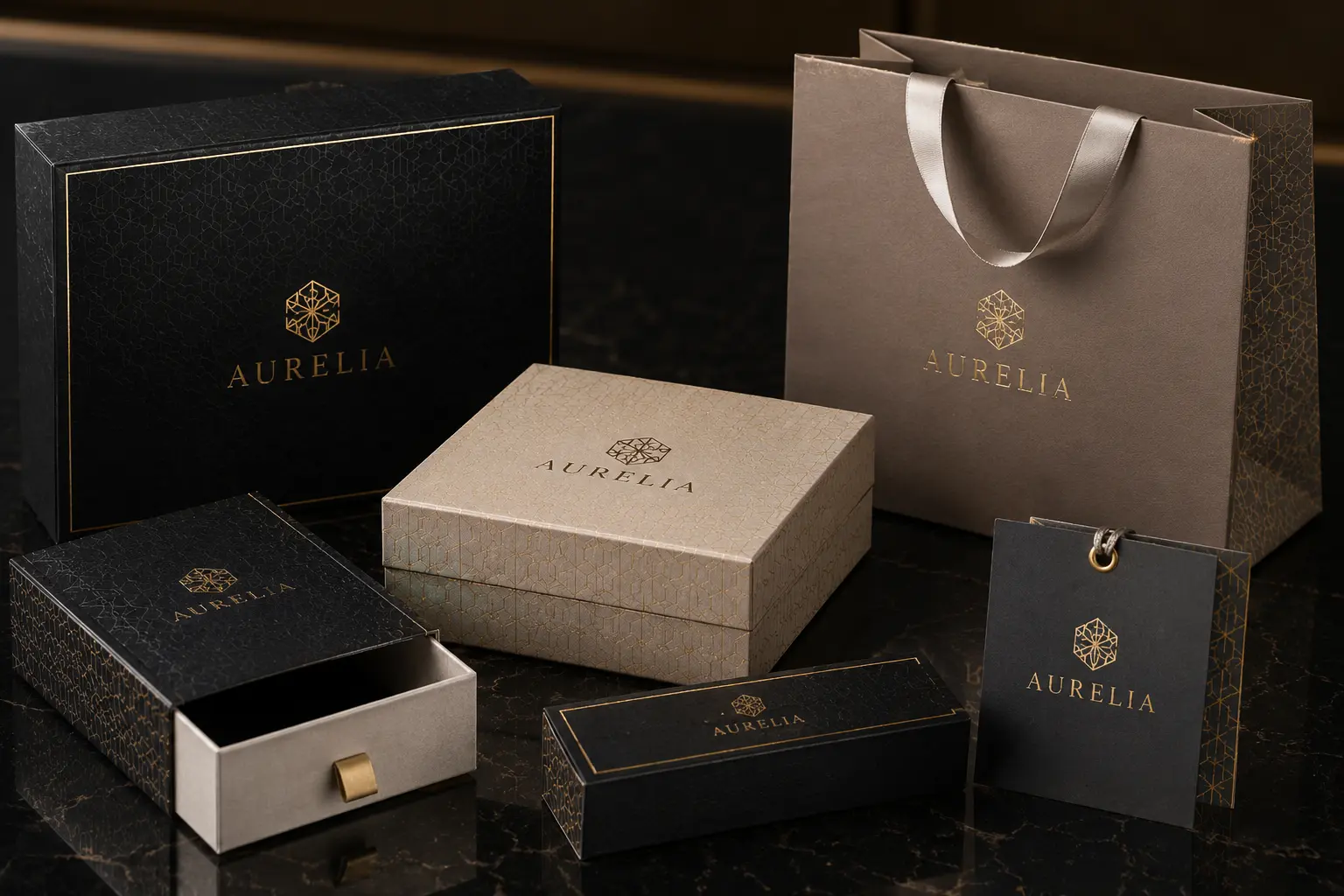
What Is Foil Stamping?
Foil stamping transfers metallic, matte, glossy or colored foil onto a packaging surface using heat, pressure and a custom plate.
It is often used for logos, brand marks, borders, patterns and accent details on paper boxes, rigid boxes, gift boxes, paper bags and product cards.
Foil should be planned together with logo printing, embossing and debossing and the paper surface selected in packaging materials.
- Brand logos and product names
- Decorative lines and borders
- Rigid box lids and drawer box fronts
- Paper bag logos and gift box details
- Jewelry, perfume and cosmetic packaging
When Foil Stamping Works Well
Foil stamping works best when the artwork is clear and the surface can hold the foil cleanly.
Clear Logo Marks
Foil works well for simple logo marks, clear text with enough spacing and brand details that do not rely on tiny lines.
Minimal Packaging
Foil can be effective when the rest of the packaging is simple and the logo becomes the main visual focus.
Smooth Surfaces
Smooth paper, wrapped paper and compatible laminated surfaces usually support cleaner foil edges.
Gift Presentation
Gift packaging, jewelry boxes, perfume boxes and corporate gift boxes often use foil as a controlled brand detail.
Foil Color Options
Gold foil is common, but it is not the only option. Foil color should be chosen with the paper color, brand tone and product category.
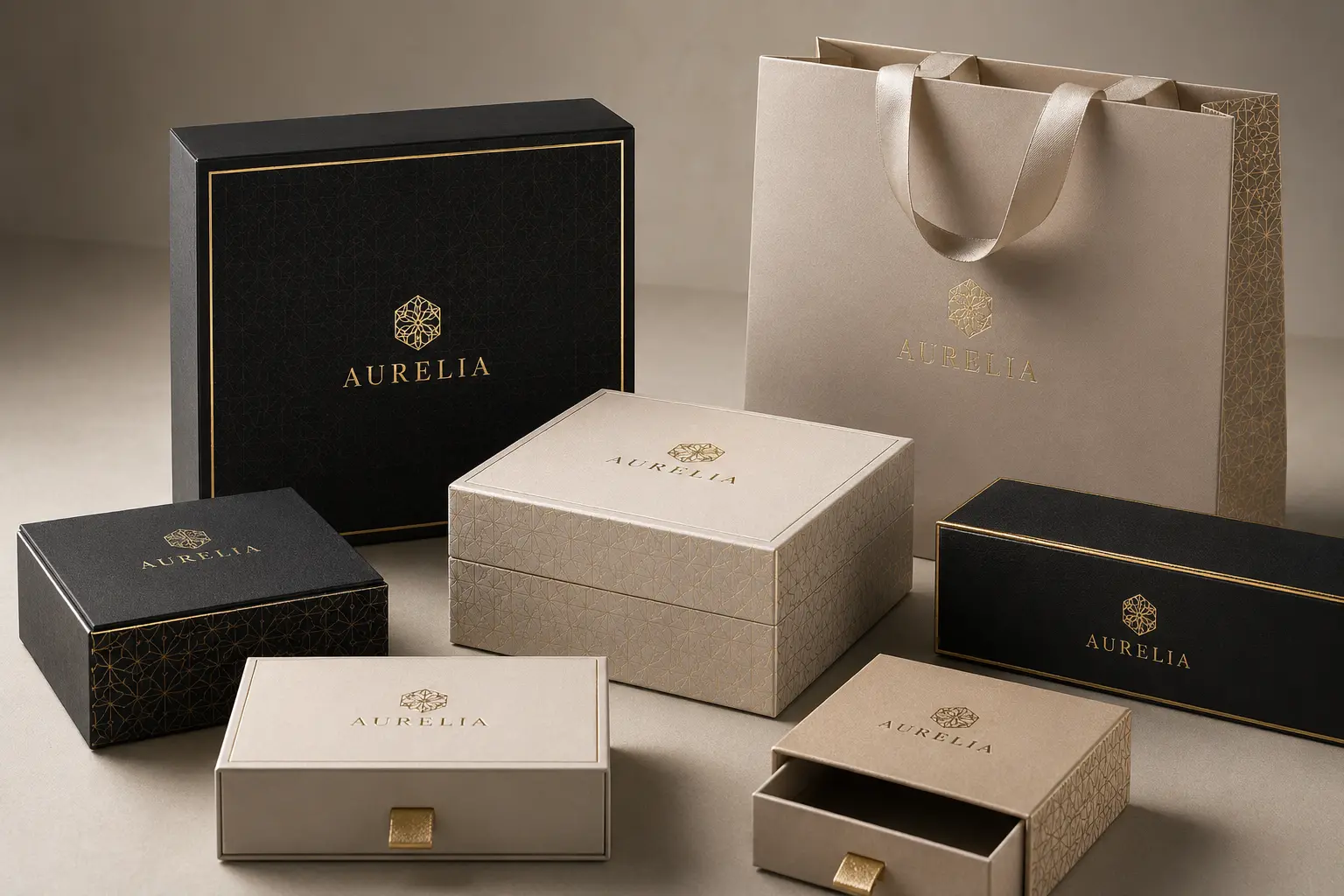
Gold and Champagne Foil
Gold foil, champagne gold foil and soft gold tones are often used for gift boxes, jewelry packaging, perfume packaging and premium retail packaging.
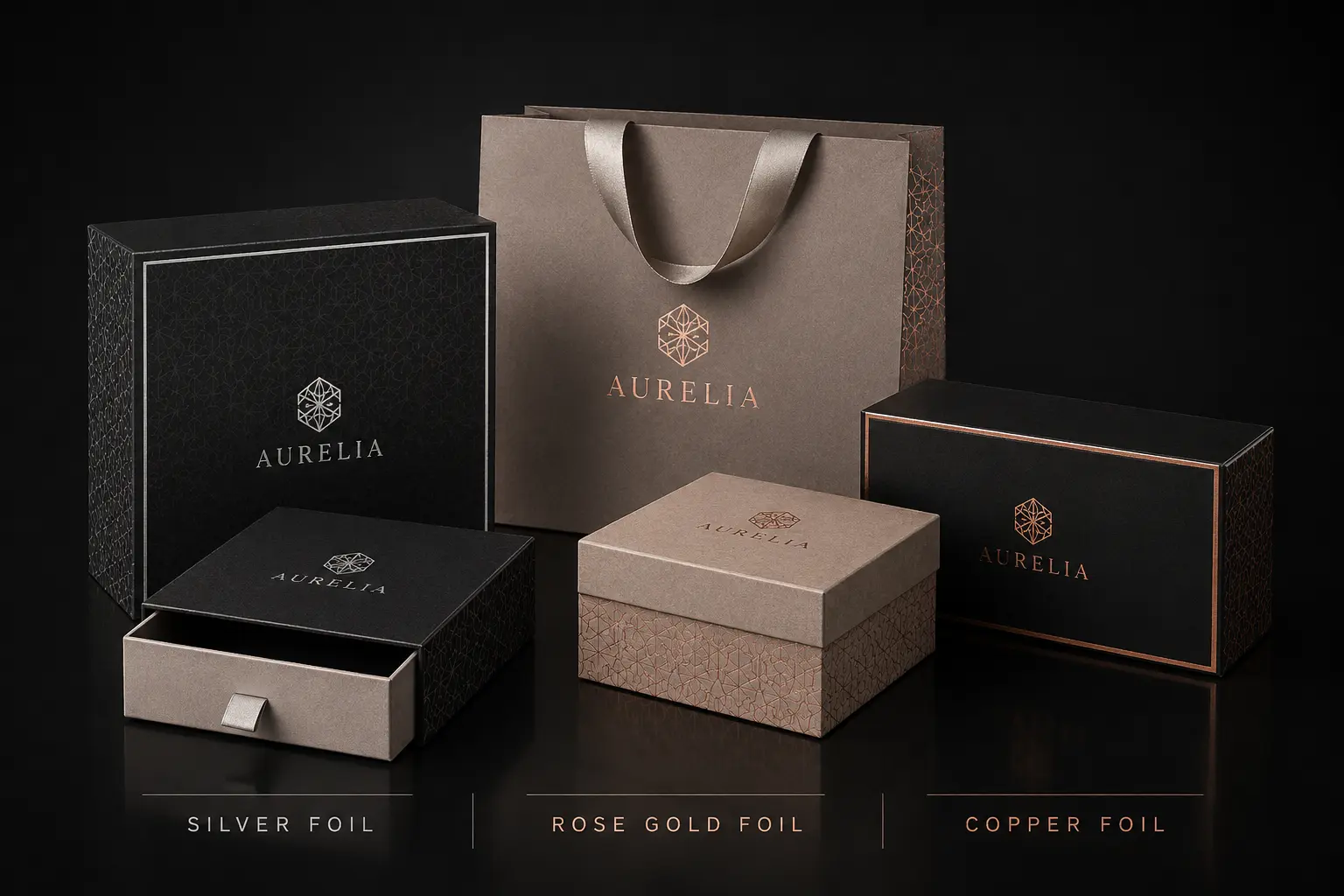
Silver, Rose Gold and Copper
Silver, rose gold and copper foil can create different brand tones depending on paper color, surface texture and product category.
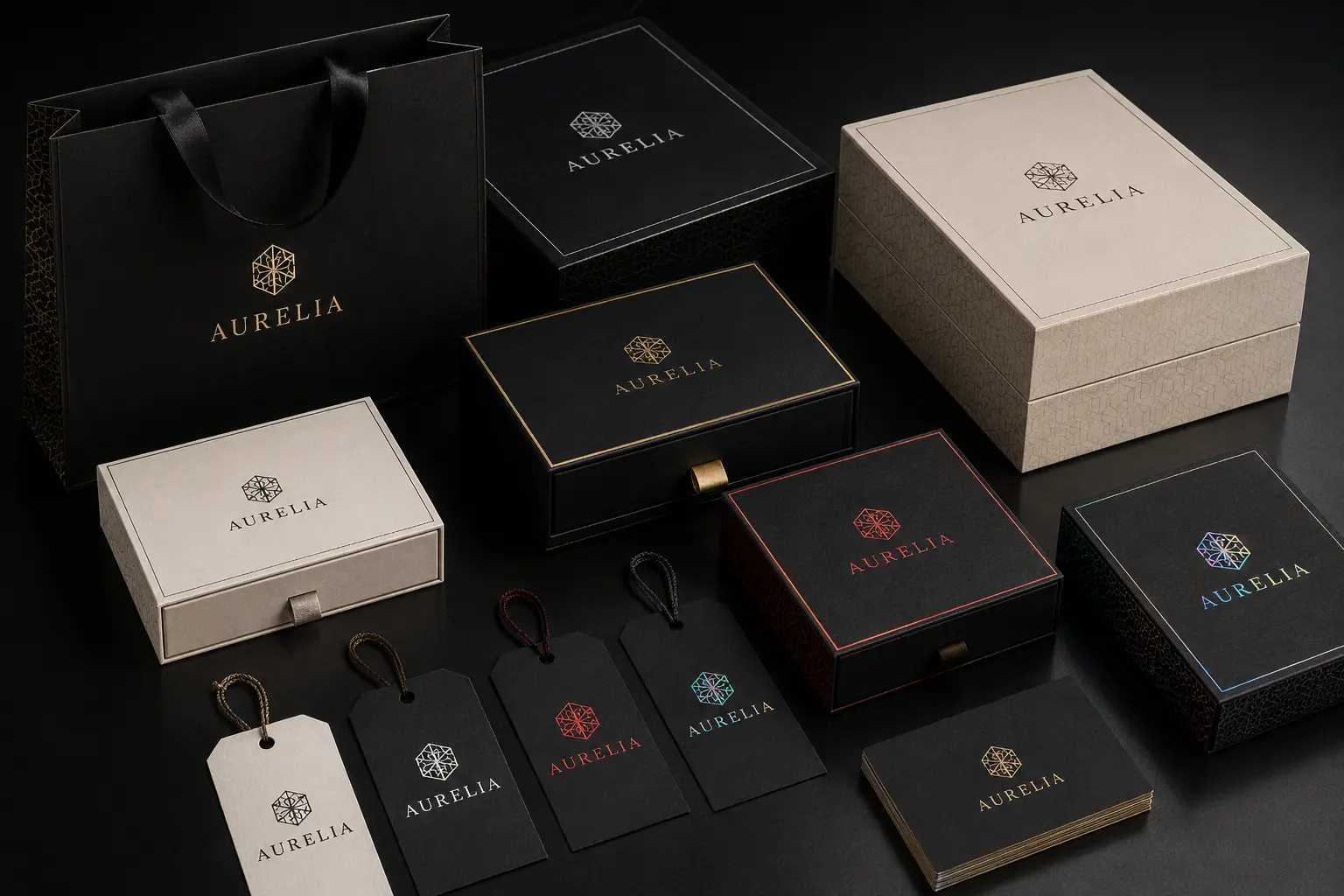
Black, White and Colored Foil
Black, white, holographic, matte, glossy and colored foils may be used when they match the paper and desired visual direction.
Suitable Packaging Types
Foil stamping can be applied to several paper packaging formats when the surface and structure are suitable.
Rigid Boxes
Foil can be applied to rigid box lids, magnetic flaps, drawer fronts, lid and base boxes and sleeve fronts.
Paper Bags
Paper bag foil should be checked with handle distance, side fold position, bottom fold area and paper thickness.
Paper Tubes
Paper tubes need review of front-facing logo position, tube diameter, wrap seam and foil pressure on curved surfaces.
Cards and Tags
Foil can be used on product cards, sleeves, gift tags and inserts when the paper surface and artwork are suitable.
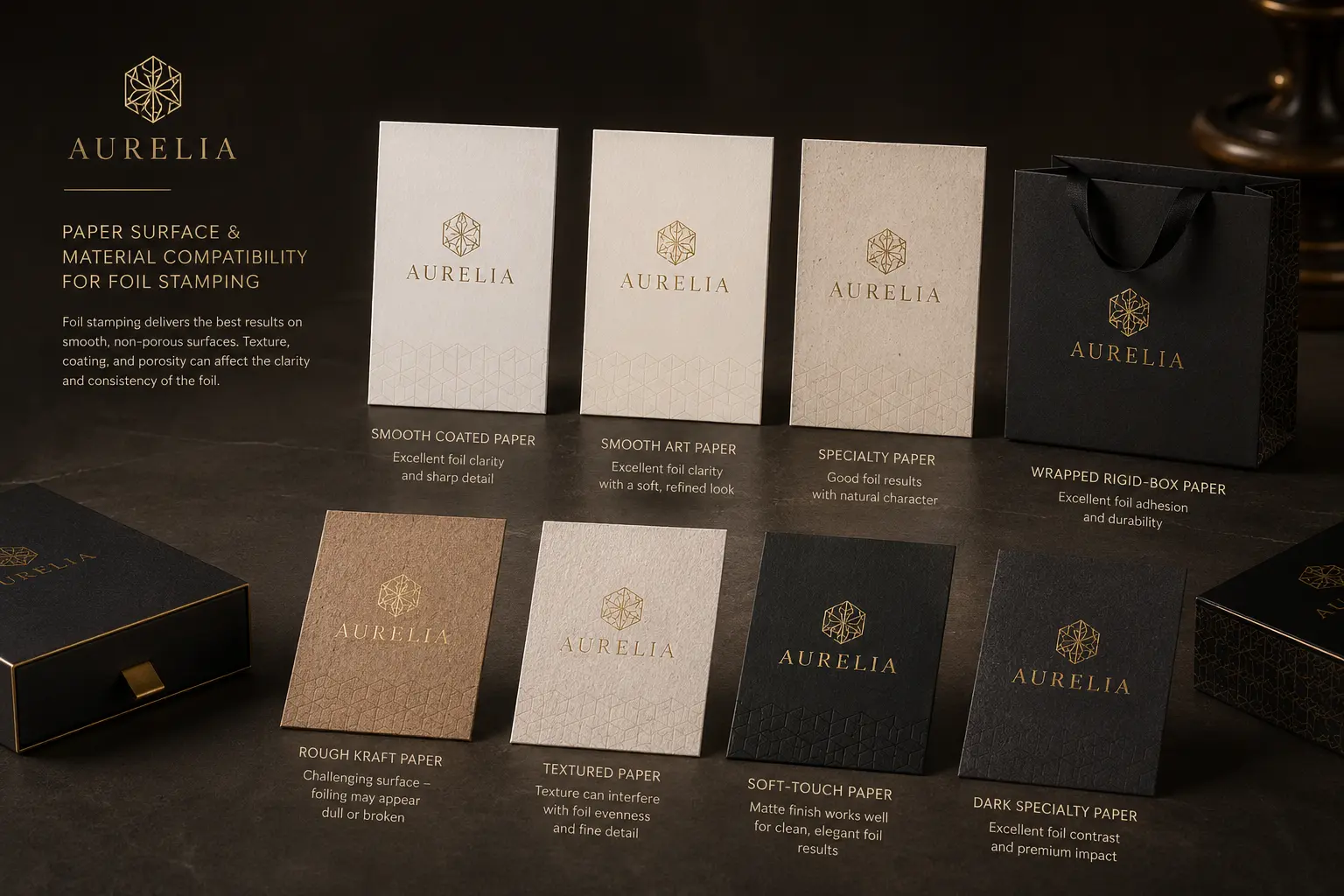
Paper Surface and Material Compatibility
Foil stamping does not behave the same on every paper. Surface texture, coating, softness and paper absorbency can affect foil adhesion, edge clarity and shine.
Usually Better On
- Smooth coated paper
- Smooth art paper
- Some specialty papers
- Wrapped paper for rigid boxes
- Smooth paper bag surfaces
May Need Testing
- Rough kraft paper
- Deep textured paper
- Soft-touch surfaces
- Uncoated paper
- Dark specialty paper
Logo Size, Line Thickness and Small Text
Foil stamping has limits. A logo that prints well in ink may not stamp clearly in foil if lines are too thin or gaps are too small.
- Minimum line thickness
- Small text size
- Space between letters
- Thin serif fonts
- Fine patterns and detailed icons
- Large solid foil areas
- Reversed-out text inside foil
Foil Plate Cost and Setup
Foil stamping generally requires a custom metal plate or die for the specific logo or artwork area. This setup can affect cost, especially for small quantities or multiple designs.
- Plate size
- Number of foil positions
- Number of foil colors
- Logo complexity
- Stamping area
- Material surface
- Whether embossing or debossing is combined
Foil Position on Boxes, Bags and Tubes
Foil placement should work with the packaging structure. The best area is usually a flat surface with enough distance from edges, folds, magnets, handles and seams.
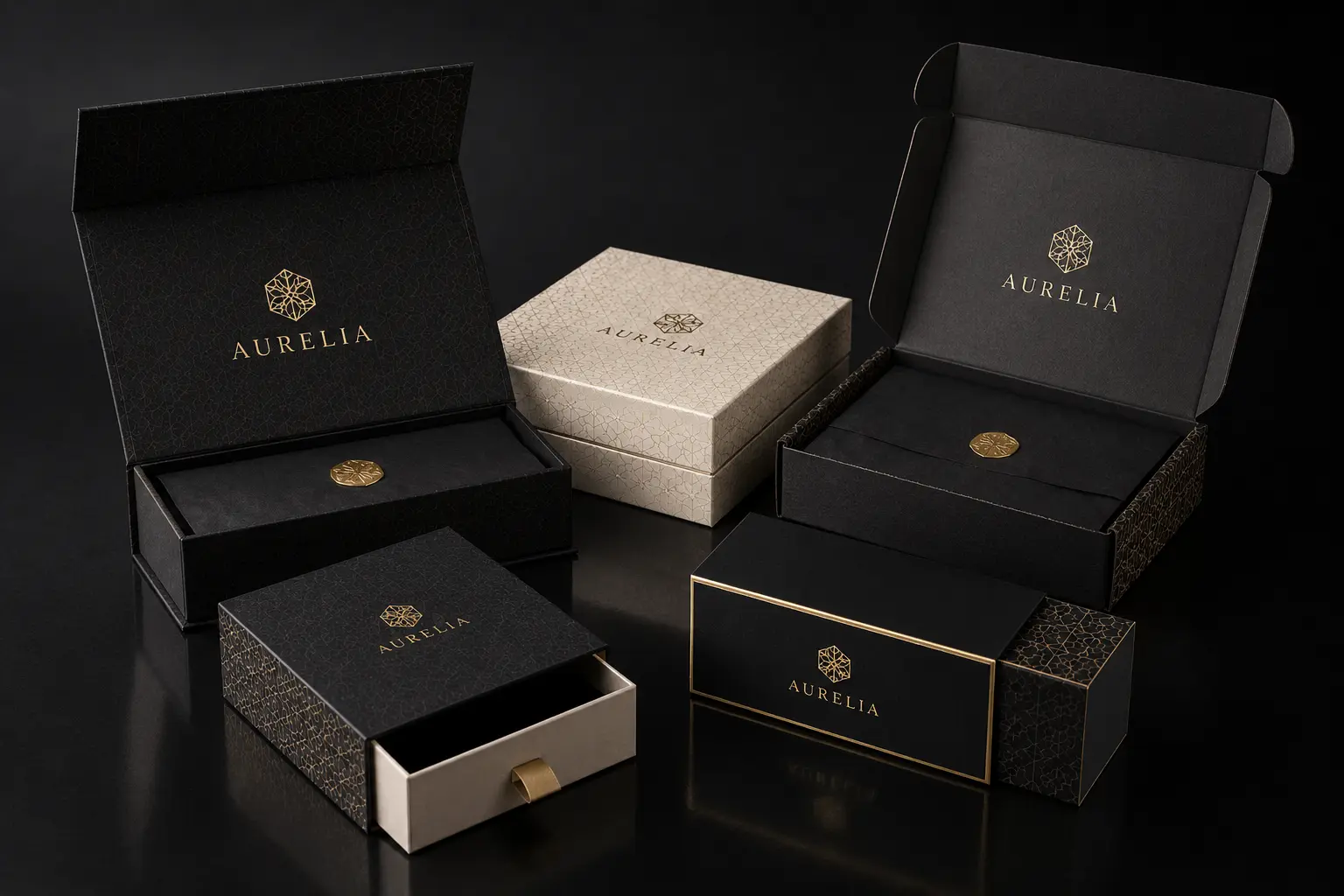
Foil Position on Boxes
Check the rigid box lid, magnetic flap, drawer front, sleeve front, folding carton panel and mailer box lid on the dieline and sample.

Foil on Paper Bags
Check front panel size, logo position, distance from handles, side fold position, bottom fold area, paper thickness and bag color.
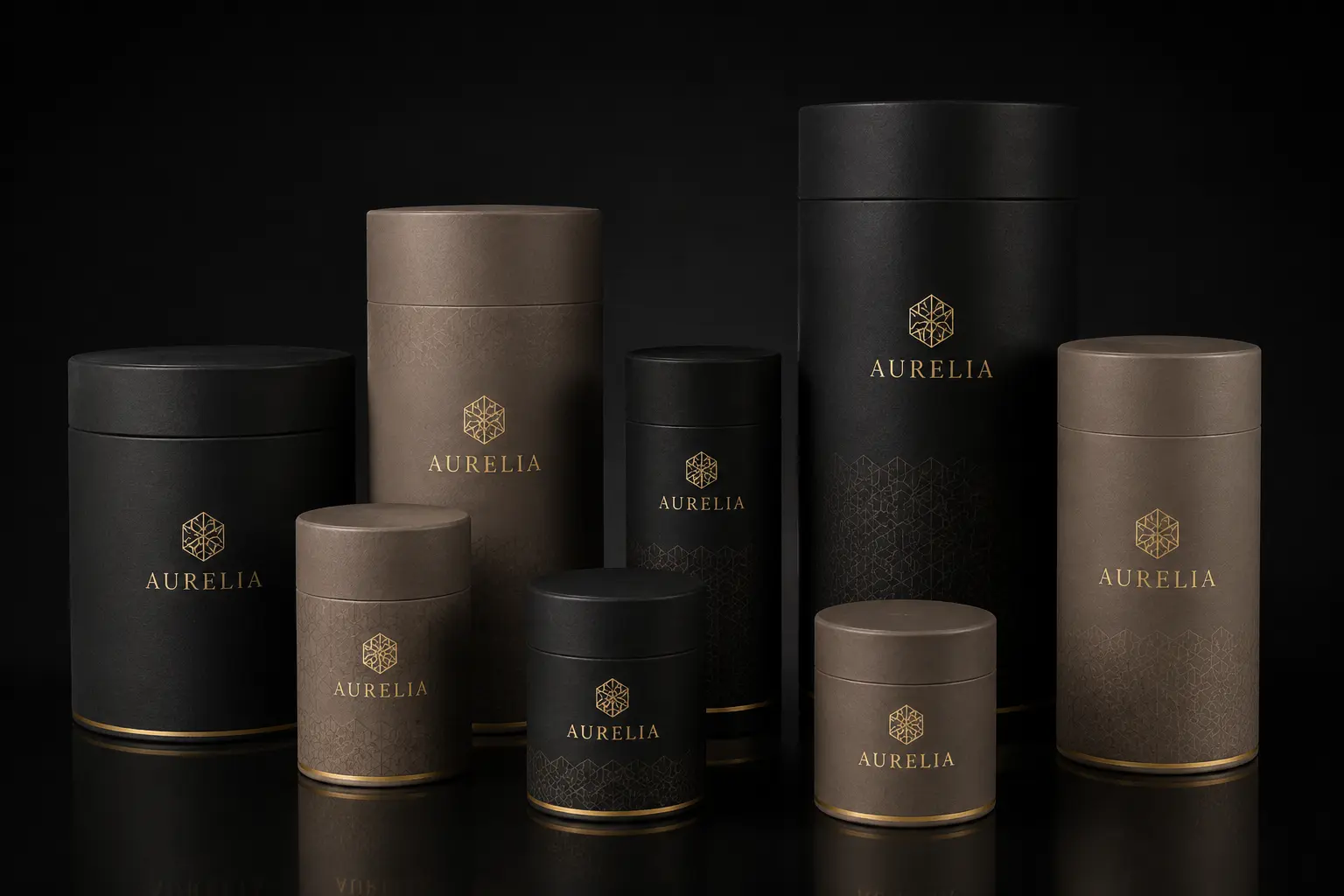
Foil on Paper Tubes
Check front-facing logo position, tube diameter, label seam, top and bottom spacing, curved surface pressure and lid orientation.
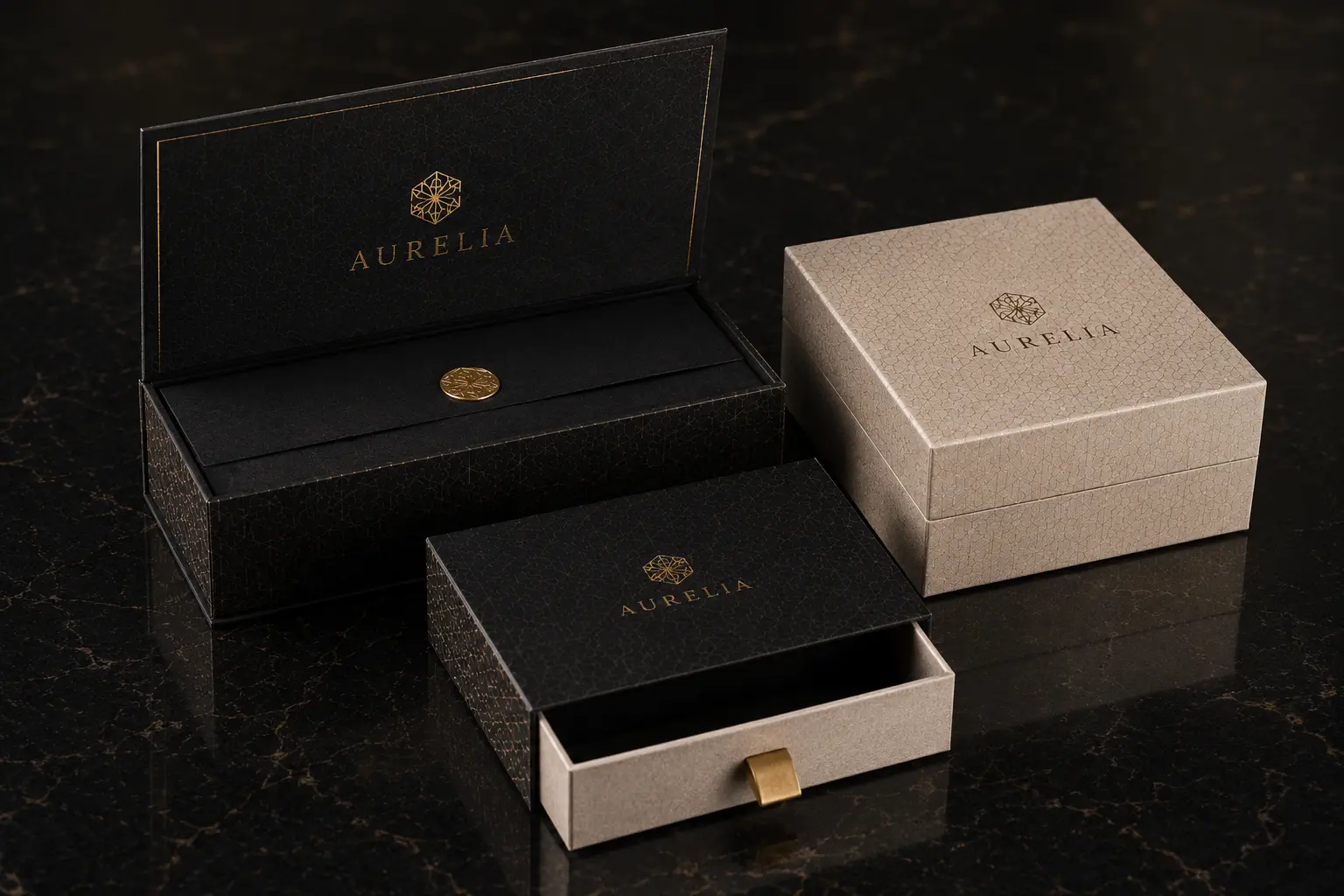
Combining Foil With Embossing or Debossing
Foil stamping can be combined with embossing or debossing to create both shine and physical depth.
This combination is common for luxury gift packaging and jewelry packaging, where small logo details and surface feel are part of the brand presentation.
- Foil stamped logo with embossing
- Foil stamped logo with debossing
- Blind debossing plus small foil detail
- Foil border with raised logo
- Foil logo on textured specialty paper
Combination effects require better alignment and more careful artwork review. Cost and sample time may also increase.
Foil and Artwork Files
For foil stamping, the artwork should clearly show which part is foil and where it should be placed.
- Vector logo file
- AI, PDF, EPS or SVG format
- Foil layer separated from print layer
- Clear dieline position
- Solid black artwork for foil area if requested
- Text outlined
- No low-resolution logo image
- Clear file name
Sample Approval for Foil Stamping
Foil stamping should be checked on a sample whenever possible, especially for gift packaging, specialty paper, small logos, dark paper or combination finishes.
- Foil color and foil shine
- Logo position and edge clarity
- Fine line result and text readability
- Foil adhesion and surface marks
- Alignment with print or embossing
Common Foil Stamping Problems
- Fine lines disappearing
- Small gaps filling in
- Text becoming unreadable
- Foil not adhering well
- Foil edge breaking
- Uneven pressure
- Stamping position shift
- Large foil area looking uneven
- Foil cracking near folds
When Foil Stamping May Not Be Best
- The logo has tiny details
- The design includes gradients
- The artwork needs many colors
- The surface is too rough
- The stamping area crosses a fold
- The quantity is very small
- The brand wants a flat printed color instead of shine
- The budget cannot include plate cost
What to Send for Foil Review
- Logo file
- Packaging type
- Product type
- Quantity
- Preferred foil color
- Material or paper preference
- Desired foil position
- Reference images
- Artwork file if available
- Whether embossing or debossing is desired
- Target sample schedule
If you do not know the right foil color or surface, send the brand style and product details. We can suggest a starting direction for review.
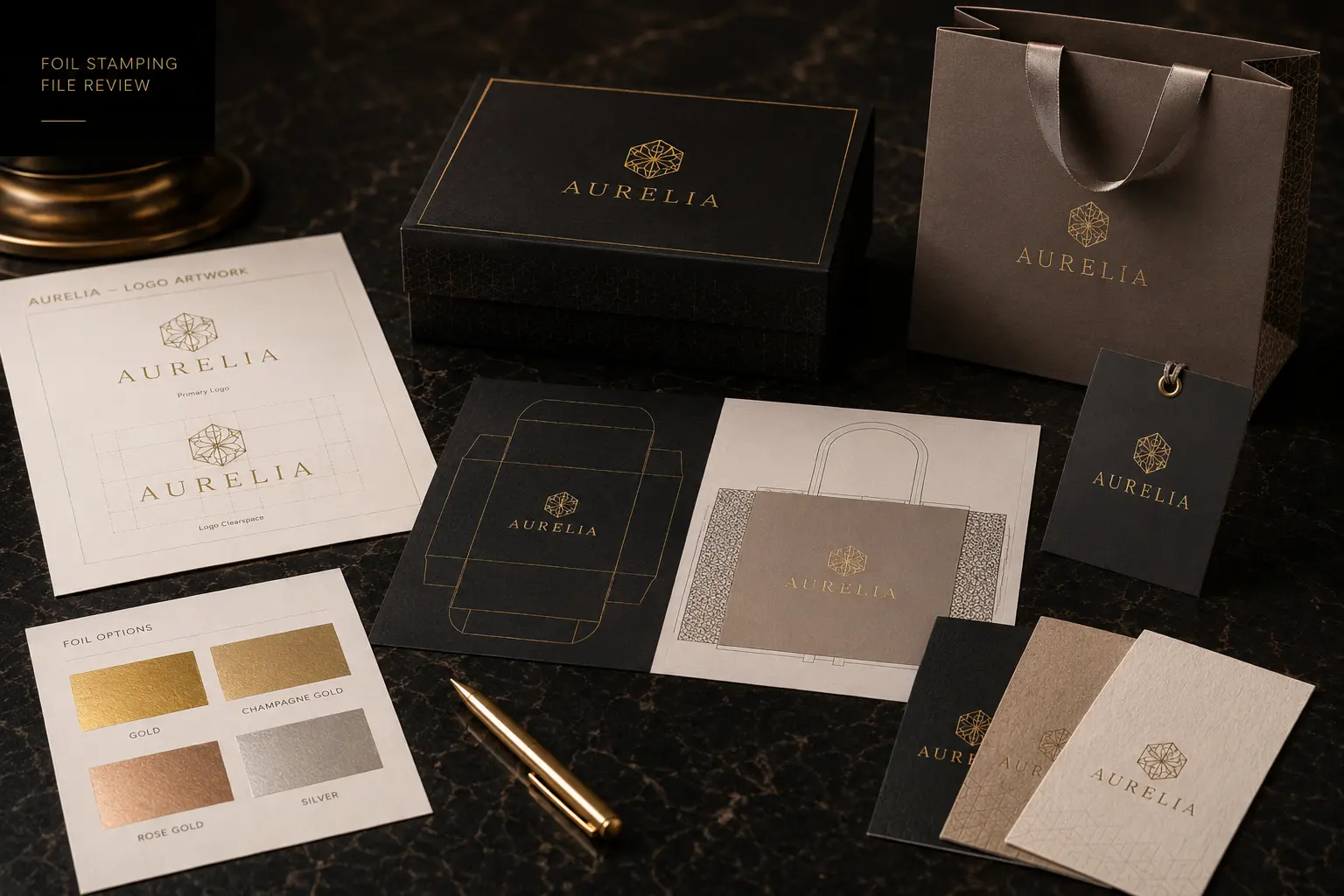
Request Foil Stamping Advice
Send your logo file, packaging type, quantity, preferred foil color, material idea, desired foil position and reference images. We can review artwork limits, paper surface, plate setup and sample needs before production.
Send Your Logo FileFrequently Asked Questions
Common questions about foil colors, paper bags, logo limits, plate cost, embossing and foil sample approval.