May 28, 2026 | Sustainability
Whether an FSC claim is needed depends on the buyer's sourcing policy and the product brief. A logo should be used only when the actual product and supply chain support the claim.
1. Understanding FSC Certification
Read the actual label type rather than translating every FSC mark into the same fiber claim. FSC Mix, for example, is not a statement that every fiber came from a certified forest. Match the proposed statement to the official label guidance and the material supplied for the order.
FSC labels identify different forest-based material claims. FSC Mix can include certified, recycled and controlled sources; it does not mean every fiber comes from an FSC-certified forest. Check the exact claim using FSC's label explanation and the order documents.
2. Material Innovation: Luxury Meets Green
A recycled board or selected ink can be evaluated as a specification option, but it needs its own evidence and sample approval. Compare wrap appearance, fold behavior and the finished construction before calling a material change an innovation or attributing an environmental improvement to it.
3. The Brand ROI of Going Eco-Friendly
Today’s luxury consumer values transparency. By opting for eco-friendly wholesale packaging, you are telling a story of responsibility. It builds a deeper "Vibe" trust with your customers, turning every purchase into a statement of shared values.
FSC 100%, FSC Mix and FSC Recycled: What Each Label Means
Three FSC on-product labels exist and they are not interchangeable. FSC 100% means all fibre comes from FSC-certified forests. FSC Mix means the fibre is a mixture of certified, controlled and recycled sources that meets FSC's mix rules, and it is by far the most common label on greyboard and wrap paper. FSC Recycled means the product is made from 100% pre- or post-consumer reclaimed material.
Specify the required claim for the wrap, core and other forest-based components before sourcing. Availability and cost depend on the materials and order; no single FSC label is automatically the best fit for every box.
How to Verify a Supplier's FSC Claim
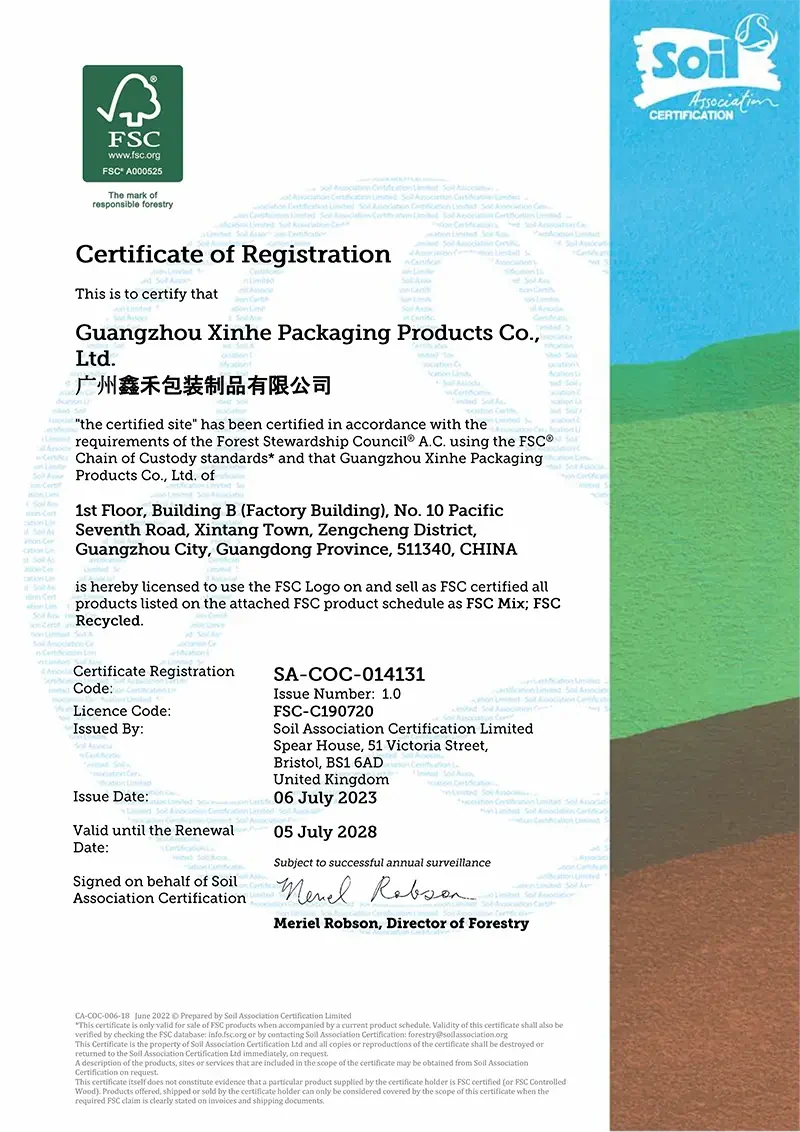
An FSC claim is only real if it is backed by a chain-of-custody code that you can look up. Search the code on the public FSC certificate database, confirm the certificate holder name and scope match the supplier, and check the expiry date. Then make sure the same code appears on the quotation, the sales contract and the final invoice; without it on the invoice the product cannot be sold as FSC certified downstream.
A supplier that uses FSC-certified paper but does not hold its own chain-of-custody certificate cannot pass the claim on to you. That distinction catches many buyers.
What FSC Does Not Cover
The certificate speaks only to fibre sourcing. It says nothing about the magnets, ribbon, foil, lamination film or the ink, and nothing about whether the finished box is recyclable in your market. Treat FSC as one line in the sustainability specification and pair it with material declarations for the non-paper components and a recyclability statement for the finished construction.
Compare certified and alternative materials on the same board grade, wrap, finish and quantity. Request the actual price and availability rather than assuming a standard certification premium.
Build your brand on values.
→ View Our Compliance & Certifications
Check the board and decorative wrap against FSC's label explanation. A luxury finish does not determine which sourcing claim applies. Confirm the covered materials and authorized artwork, with recyclability and food-contact suitability reviewed on their own evidence.
Put this guide into practice
Document the sourcing requirement and approve the chosen material’s appearance independently. Use confirmed product information in artwork rather than repeating a broad luxury-sustainability trend claim.