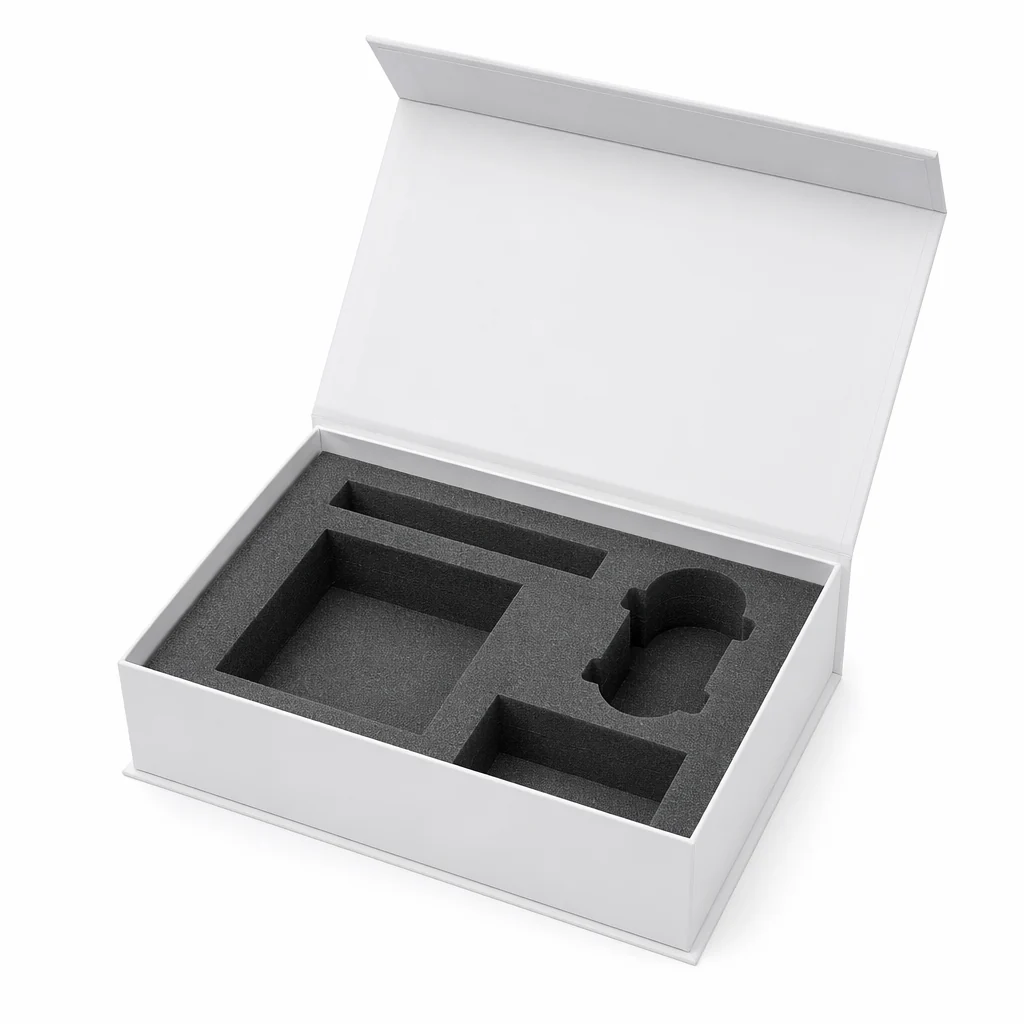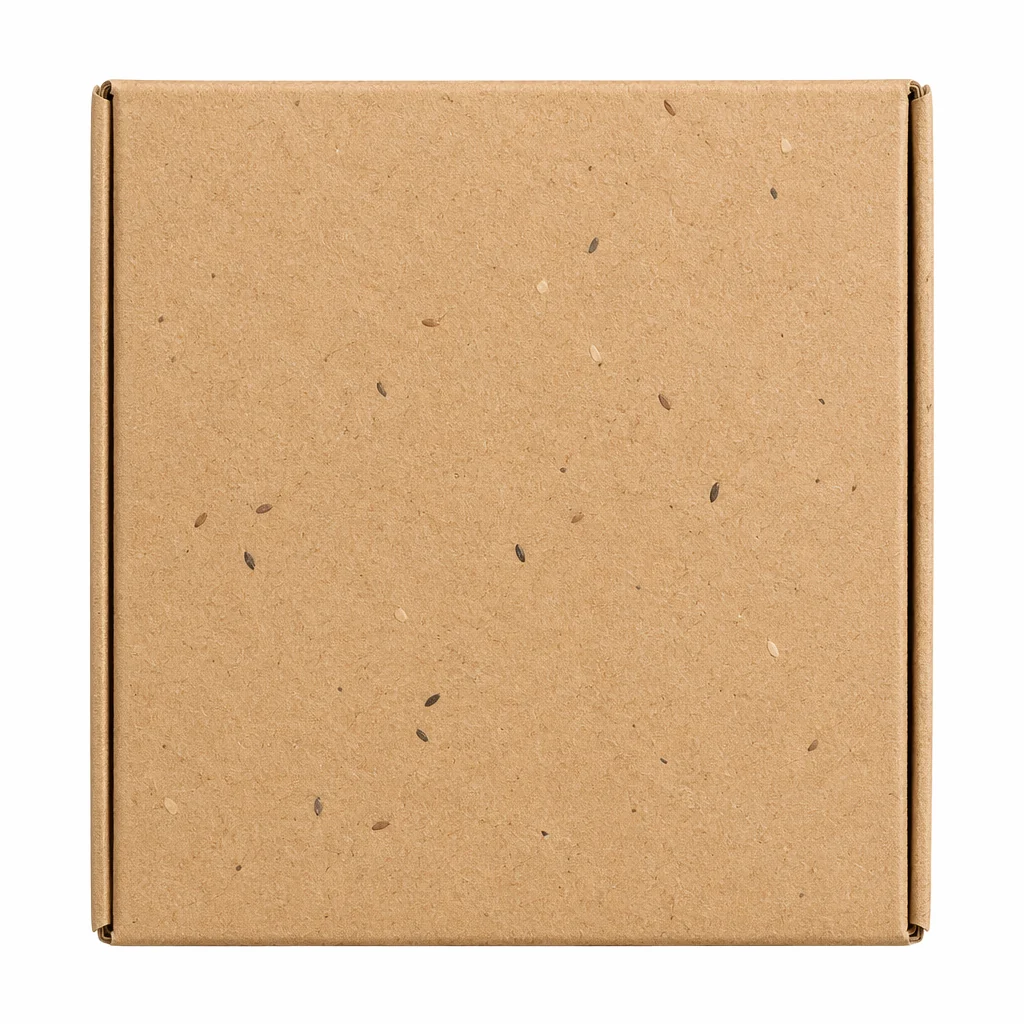
Compare presentation and environmental goals through the actual components. A polished finish can be considered alongside material reduction or sourcing requirements, but the complete construction and supporting evidence determine which claims can be made.
1. Beyond the FSC Logo
Specify forest-based sourcing and recycled content separately. An FSC statement does not establish a recycled percentage or the finished box’s strength. Identify the board and wrap grades, required claim and evidence, then approve their actual appearance and construction.
2. Plastic-Free Inserts
Compare alternative inserts against the same product-support task. Molded pulp, cardboard and other materials differ in construction, fit and recovery requirements. Replacing foam is not sufficient evidence that the whole pack is plastic-free, compostable or lower impact; inspect the remaining layers and any supporting claim scope.
3. Soy-Based & Water-Based Inks
Specify the proposed ink formulation and process on the chosen paper, then approve color and black coverage on a physical sample. Soy-derived content or a water-based formulation does not establish circularity or recovery of the whole pack; assess the remaining materials and the relevant collection system separately.
4. The "Mono-Material" Strategy
A simpler material mix can make separation easier, but acceptance depends on the complete construction and local collection system. Identify coatings, adhesives and inserts as well as the outer paper before giving disposal instructions; a paper appearance does not guarantee recovery.
5. What to Confirm Before You Switch a Line
Not every "eco" spec survives contact with a production line unchanged. Before moving a box to recycled board or a bio-based insert, confirm three things at quotation stage: a physical sample in the exact GSM and finish you intend to order, since recycled fiber can shift both hand-feel and print contrast against virgin board; a real transit test rather than a lab claim, because structural strength on high-recycled-content rigid board can differ enough to matter for heavier products (see our ISTA shipping test guide for which test applies to your shipping route); and the MOQ for the sustainable version specifically, since a mono-material or recycled-fiber build sometimes carries a different minimum than the standard spec of the same box. It's also worth asking whether the switch needs a new die-line or just a material swap on the existing one — a full mono-material redesign changes both cost and timeline in ways a same-structure recycled-fiber order doesn't.
Go Green Without Losing the Gold
Let us audit your current packaging and show you how to identify specific material and construction improvements.
Get Eco Audit → WhatsApp Sales
Put this guide into practice
Choose one defined improvement and approve the revised loaded pack before expanding it across a range. Update the material records and claim wording when the construction changes.