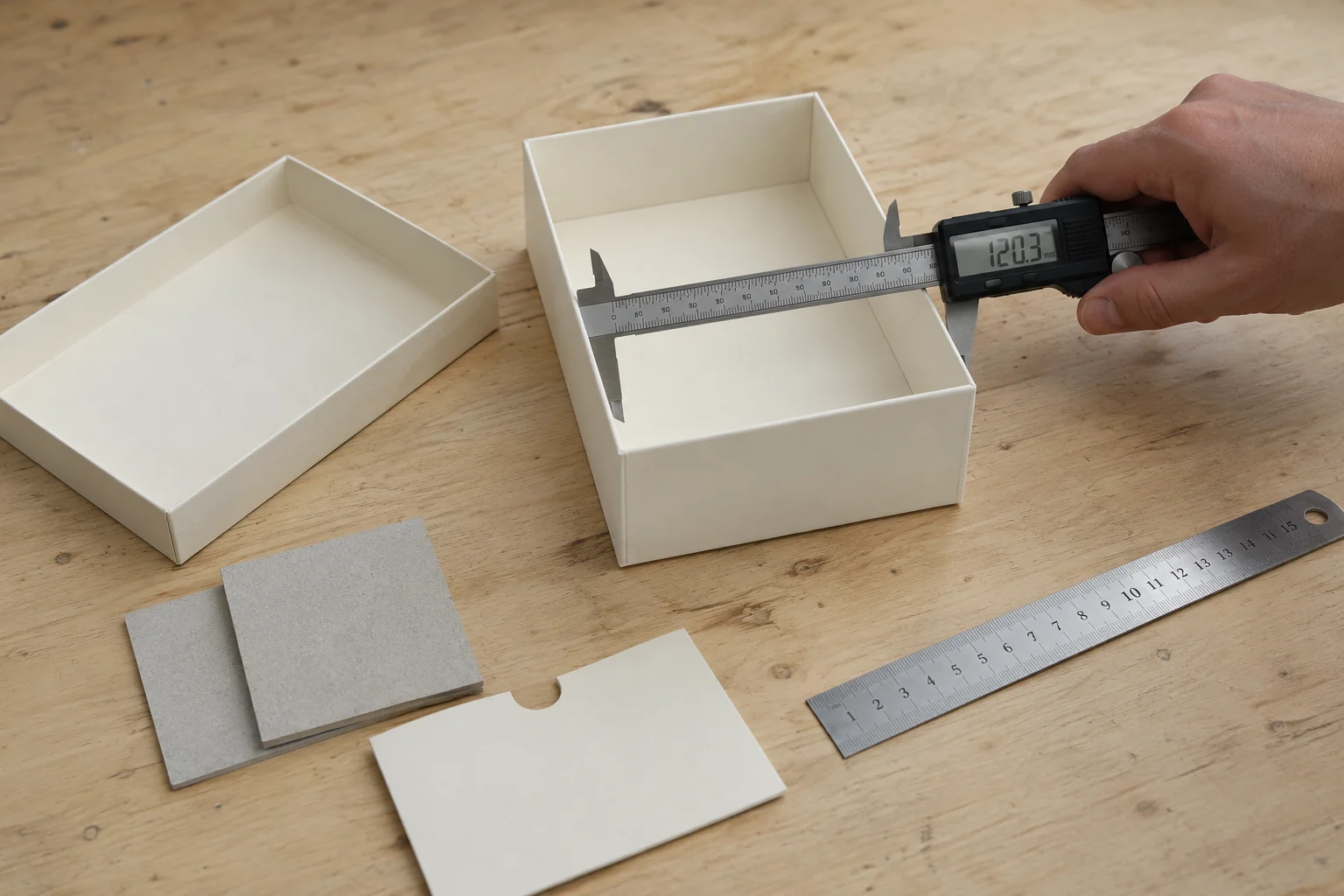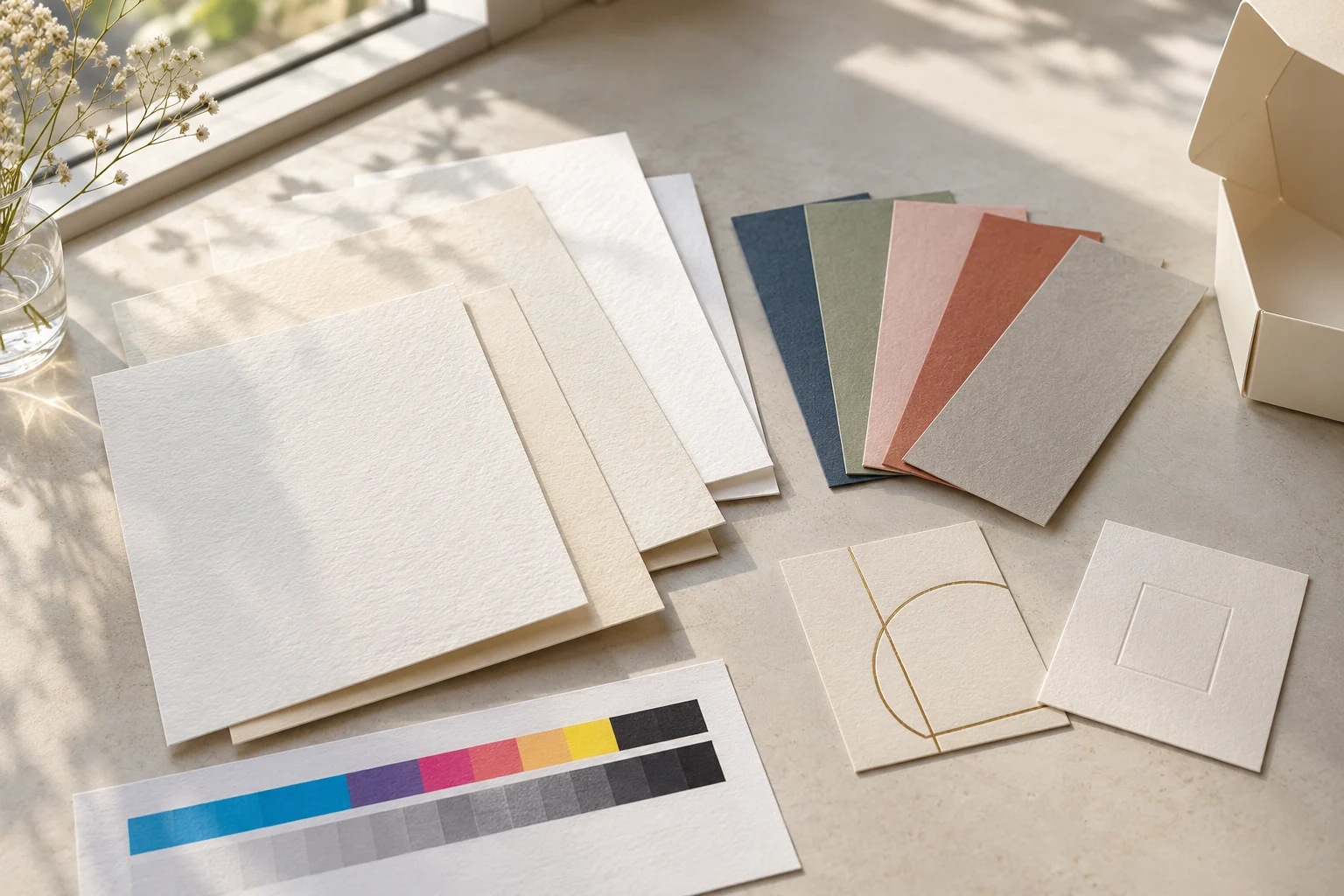
Print & Color Approval
Define how the supplied file, substrate, print route and physical approval reference connect before reviewing production color.
Buyer Answer: Treat RGB or HEX as screen references, not physical acceptance criteria. Choose a CMYK process or named spot-color route, then proof on the exact paper, board or wrap with the intended laminate, varnish and texture. Approve against a signed physical production reference, using the viewing light and measurement method agreed by buyer and supplier.
What a color reference can—and cannot—approve
State what the reference is intended to approve. A screen preview can settle layout, while a paper swatch or finished proof answers a different color question. Record the chosen ink route, paper and surface treatment so a later “same color” request does not silently compare different constructions.
Separate two approvals. A digital layout approval freezes copy, dimensions, image placement, separations and version control. Physical color approval establishes the target appearance on named materials. For process artwork, define the CMYK profile and output conditions with the prepress provider. For a brand-critical solid, a named spot color can create a clearer ink target, but it does not cancel the material and finishing variables. The print-ready artwork and dieline guide covers file construction; the finishes guide helps freeze the surface stack.
A nine-gate color approval workflow
Use the approval gates to expose changes before production. For each proof, identify its substrate, finish and revision, and record what remains unapproved. A buyer who approves burgundy on coated stock has not automatically approved its appearance on warm uncoated paper or beneath a matte laminate.
- Receive the brand reference. Record whether it is RGB, HEX, CMYK, a named Pantone reference, a printed brand standard or an approved existing pack. Photographing a reference does not convert it into a measurement standard.
- Choose the print route. Define CMYK process for imagery and builds, a named spot-color route for a critical solid, or an intentional combination. Do not let an unnamed “burgundy” substitute for a controlled target.
- Freeze the substrate. Name the paper, board or wrap grade, supplier code, shade or white point, and any opaque underprint. A white coated sheet and a warm uncoated sheet are different color systems.
- Freeze the finish stack. State gloss or matte lamination, varnish, coating and texture. If embossing changes how light falls across the area, include it in the sample review. Revisit finish choices with the packaging finishes guide when needed.
- Approve layout separately. Use the screen PDF or digital proof to approve content, trapping intent, dieline position and separations. Mark it “layout approved” rather than treating it as final physical color acceptance.
- Compare a physical color proof. Review an ink drawdown on the actual stock or an appropriately specified contract proof. Document what the proof simulates and what remains press-dependent.
- Approve the converted sample. Inspect a printed, laminated or varnished, folded sample so color is judged with real construction, grain, seams and adjacent materials. Use the pre-production sample checklist to record the wider sample decision.
- Sign and retain the production reference. Buyer and supplier identify the approved piece, version, date, substrate, finish and authorized approver. Store it protected from light, moisture and contamination.
- Define reapproval triggers. Require a new decision when ink system, press route, substrate lot or grade, paper white point, laminate, varnish, artwork build or approved reference changes. Record who must approve the changed proof and whether production pauses until the new reference is signed.
Which proof answers which question?
| Approval item | What it proves | What it does not prove |
|---|---|---|
| Screen PDF | Content, layout, version and stated color definitions. | Printed appearance, substrate influence or finish shift. |
| Digital proof | Layout and an approximate calibrated preview under its stated simulation. | Exact ink interaction with the chosen wrap, coating or press. |
| Ink drawdown/contract proof | A physical color comparison under defined proof conditions. | Every folding, laminating, varnishing or production-press variable. |
| Printed folded sample | Appearance after actual substrate, print, finish and conversion are combined. | That future material or process changes will remain equivalent. |
| Signed production reference | The physical benchmark and approval authority for the agreed job. | A permanent universal color independent of storage, light and materials. |
Worked example: one muted burgundy, three material outcomes
Imagine a buyer supplies a muted burgundy brand reference. On white coated paper, the printer can establish the selected CMYK or named spot route against a bright, smoother base. Move that same target to warm uncoated paper and the substrate contributes warmth while absorbency may reduce saturation. Add a matte laminate over the white coated version and reflected glare falls, but the perceived depth and contrast can also change.
The correct decision is not to declare one formula universally accurate. Build and label separate physical samples for the combinations being purchased, compare them under the agreed viewing condition, and decide whether the brand goal is “same ink recipe” or “closest approved visual family across materials.” This guide intentionally declines to invent a universal Delta E tolerance. If instrument readings will be used, buyer, printer and converter should agree the device, geometry, illuminant, backing, sample location, calculation method and acceptance rule for this job before production.
Color information to include in the RFQ
- Artwork files with color mode, profiles, separations and named spot references clearly identified.
- A physical brand standard when available, plus who owns and signs the approval decision.
- Exact paper, board or wrap code; white point or shade expectation; laminate, varnish, coating and texture.
- Required proof stages, viewing or measurement method, reapproval triggers and reference-retention plan.
- Box structure, quantity and destination so the supplier can quote the same scope rather than an assumed one.
Send those inputs by email or WhatsApp and ask the supplier to return the proposed proof sequence in writing before artwork release.
Request a color-controlled quote
Sources, scope and evidence boundary
Use the printer's job-specific prepress requirements and record how the proof becomes the production reference. X-Rite's ColorCert documentation illustrates why both a measurement method and agreed tolerance are needed; settings from another job should not be copied without agreement.
Frequently Asked Questions
Why does custom packaging color look different from the screen?
Screens emit RGB light while packaging reflects light through ink, paper, coatings and texture. A HEX or RGB value is useful for communication but is not a complete physical print standard, so approve color on the actual substrate and finish under an agreed viewing condition.
Should I use CMYK or a Pantone spot color for packaging?
CMYK is appropriate for process imagery and many multi-color designs; a named spot color can give a clearer target for a brand-critical solid. Neither route removes the need to account for substrate, finish, press conditions and a physical approval reference.
Is a digital proof enough to approve packaging color?
A digital proof can confirm layout, content and approximate appearance, but it cannot fully predict ink on the selected paper, wrap, laminate or varnish. Use a physical drawdown, contract proof or printed sample when the color is commercially critical.
How should a production color tolerance be agreed?
Define the approved physical reference, substrate, finish, viewing light, measurement instrument and acceptance method in the purchase documents. Do not copy a universal Delta E number from another job because materials, print process and brand requirements differ.
What should be sent for a packaging color-matching quote?
Send the artwork color mode, named spot references or physical brand standard, exact substrate and finish, approved proof requirement, quantity, box structure, destination and who has authority to sign the production color reference.
Put this guide into practice
Keep the signed reference and viewing method with the artwork revision. Reopen the affected approval if the paper, ink route or finish changes rather than judging the revised pack against a screen capture.