Sampling & QC
By LuxoPacks Factory Team July 2026
Use each sample stage for a stated approval scope. A digital proof supports artwork review, a white sample supports structural review, and a production-representative sample should identify the intended materials and process. Confirm any substitutions or limitations explicitly instead of assuming that the supplier’s sample label establishes what it proves.
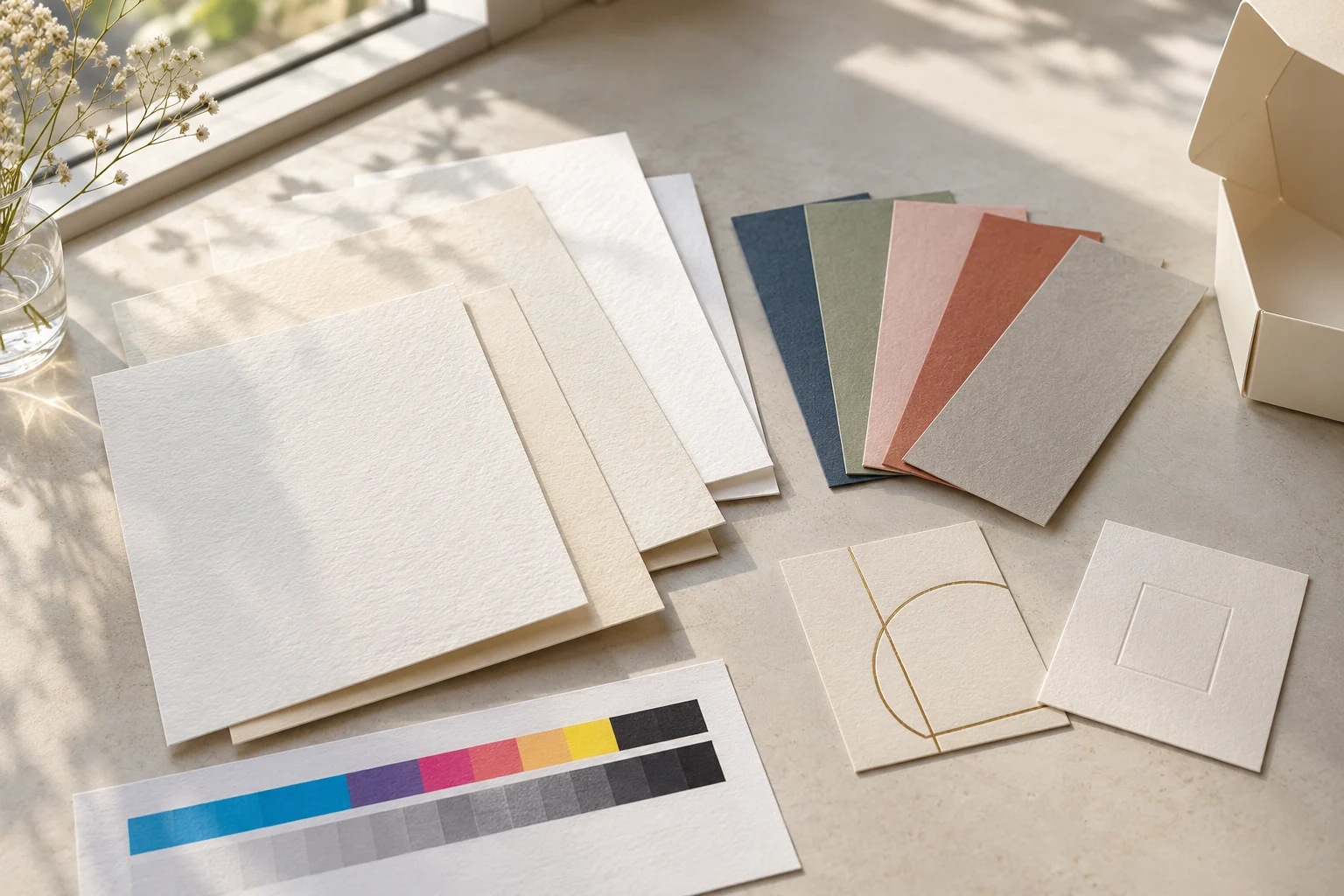
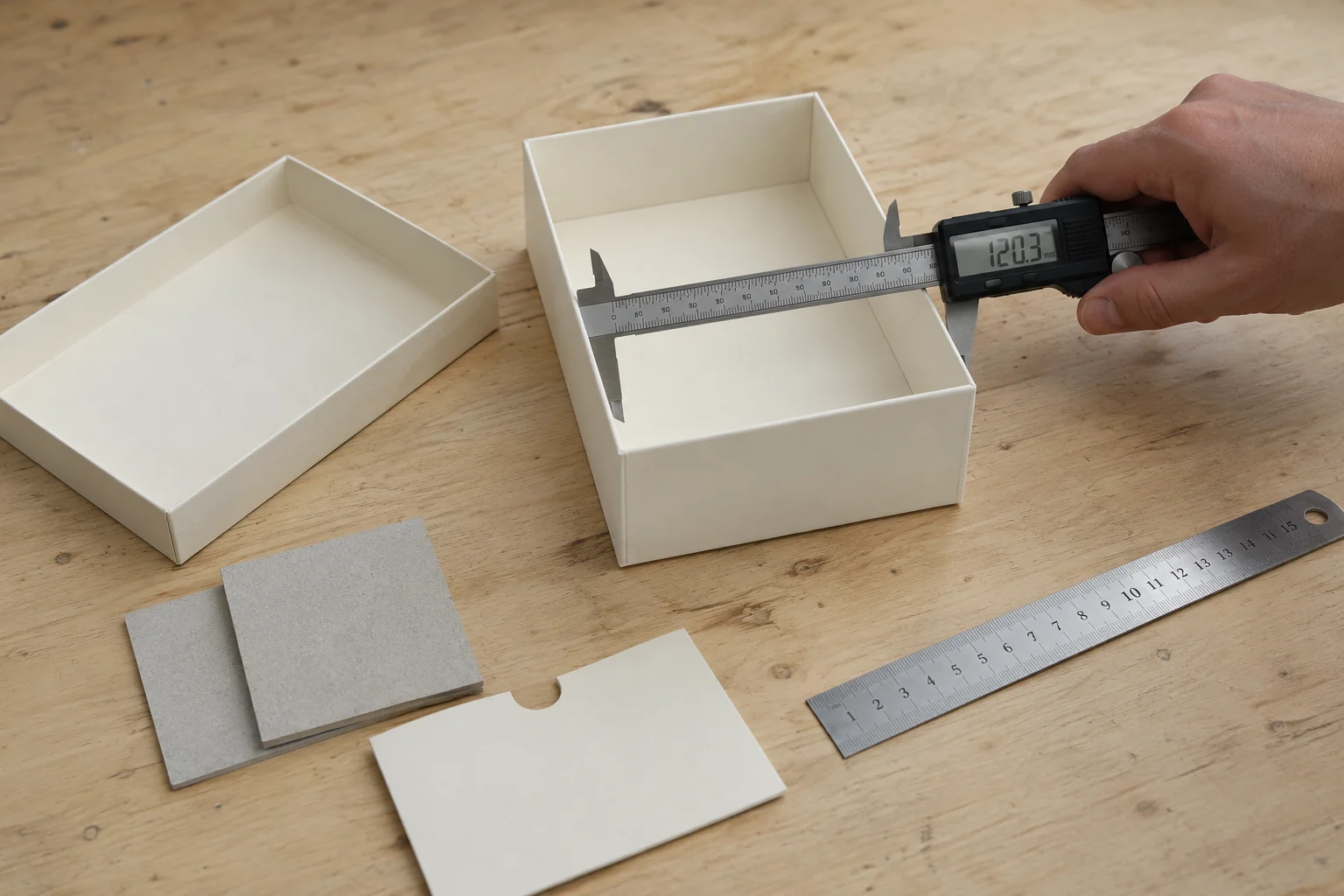
When the sample arrives, check the dimensions, board, wrap and lamination, magnet action, color reference and print registration. Confirm the sample fee and any credit terms before payment. Dimensional and color acceptance must be agreed for the project: a generic 1–2 mm allowance or an undefined 5% color difference should not decide whether the finished goods pass.
Do you actually need a physical sample? Short answer: yes
Use a physical sample to resolve questions that a file cannot answer. Load the actual product, operate the opening and inspect the selected material and finish. A flawless PDF does not establish lid clearance, drawer movement or the feel and grip of the insert.
The cost math is simple. A sample fee and a week or two of lead time is cheap insurance. Reprinting a few thousand boxes because the color came back wrong, or because the magnet is too weak to hold the lid, is not. For anyone putting a product a customer paid a premium for inside that box — beauty, chocolate, candles, spirits — the unboxing is part of what they bought. You want to have felt it first.
Rule of thumb: if the box has a magnet, a wrapped rigid lid, foil or spot UV, or tight-fitting inserts, a physical pre-production sample is not optional. Those are exactly the features a screen proof can't verify.
The three sample types, and what each one actually proves
Name the sample type and its limitations before treating it as approval. A structural white sample, printed reference and production-representative sample can answer different questions. Record substituted stock, methods or parts so an acceptable prototype does not silently authorize a different production result.
Digital / 3D proof
A rendered file showing artwork layout, logo placement, and dieline fit. Fast and usually free — but it's a picture, not a box.
Structural / white sample
A blank, often unprinted box built to your dimensions. Confirms fit, construction, hinge, and how your product sits inside.
Pre-production ("golden") sample
Made on the final tooling and real production materials with your printed artwork. This is the one you sign off before mass production.
The key distinction: a pre-production sample is made on the final tooling and production materials. That's why it — not the digital proof, not the white sample — is the correct sign-off before a run. It represents what will actually come off the line. A white sample tells you the box fits your product; a golden sample tells you what the finished, printed, laminated, magnetized unit looks and feels like.
What a digital proof can and cannot catch
Digital proofs help catch layout and content errors before physical sampling. Check spelling, panel orientation, artwork placement and safe margins while the file can still be revised; a screen proof cannot approve material feel, fit or final printed color.
| A digital proof CAN catch | A digital proof CANNOT show |
|---|---|
| Logo, text, and image placement | Board stiffness and weight in the hand |
| Spelling, legal copy, barcodes | True printed color under real light |
| Panel arrangement on the dieline | Surface texture and lamination feel |
| Whether elements fall inside safe margins | How small type actually reads at real size |
| Rough color intent (screen approximation) | Magnet strength and lid snap |
Read every word on the proof as if it's going to print ten thousand times — because it is. This is also where good dieline discipline pays off: if your artwork was built to spec, the proof stage is quick. If you're unsure how to prep files for this, our print-ready artwork and dieline guide walks through it.
Sample fees, how many rounds are normal, and lead-time impact
Sample fees are standard practice. They cover setup, material, and the labor of a one-off build that doesn't benefit from production economies of scale. Confirm the sample scope, fee, courier charge and any credit against a production order in the written quotation. Ask, and get the answer in writing, before you pay.
On rounds: one structural sample to confirm fit, then one pre-production sample to sign off, is a clean, common path. A second pre-production round happens when there's a real correction — a color that needs pulling closer to reference, a fit adjustment, a finish change. That's normal, not a red flag. What you want to avoid is discovering a fundamental problem (wrong board weight, wrong box format) only after tooling is cut, which is why the structural stage exists.
Plan the calendar: every sample round adds make-time plus shipping both ways. Build that into your launch date rather than treating sampling as a formality at the end. See how sampling fits the wider timeline in our packaging lead-time breakdown.
Exact fees, round counts, and turnaround vary by factory and by box format — a simple two-piece lid-and-base samples faster than a book-style magnetic box with a printed wrap and a foam insert. Confirm the specifics for your project as of your order date.
The tolerances buyers get blindsided by
This is where first-time buyers most often feel cheated when they shouldn't. Manufacturing has tolerances. Two things in particular surprise people:
- Structural and assembly tolerances: Identify the critical finished dimensions and agree limits in writing. If a supplier proposes ±1–2 mm, check whether that allowance still permits the actual product, insert, lid or drawer to function.
- Color acceptance: Agree the physical reference, viewing conditions and any instrument-based method and limit. X-Rite's ColorCert guidance distinguishes the measurement method and negotiated tolerance; an undefined percentage is not an equivalent acceptance rule.
Use the agreed limits and functional checks to inspect the pack. A fit-critical dimension may need tighter control than an external decorative panel. Record exceptions on the sample approval rather than assuming every deviation is normal manufacturing variation.
The physical-sample inspection checklist
When the golden sample lands on your desk, don't just admire it — run it through this. Have your product, your color reference, and your spec sheet next to you.
Dimensions
Measure length, width, height. Check your actual product fits with the intended clearance — not tight, not swimming.
Board feel & weight
Does it feel as substantial as spec'd? Press the walls and lid. Flimsy board is the fastest way to cheapen a premium box.
Wrap & lamination
Check corners and edges for lifting, bubbles, or wrinkles. Inspect the finish — matte, gloss, soft-touch — under normal light.
Magnet snap
Open and close it a dozen times. The lid should pull shut with a clean, confident snap and stay closed when tilted.
Color vs reference
Compare with the approved physical reference under the agreed viewing conditions. Where instruments are used, apply the specified measurement method and acceptance limit.
Print registration
Check that colors and layers line up — no ghosting, no misaligned foil or spot UV, small text crisp and readable.
Do this in the light your customer will see the box in. A color that looks right under warm office light can look off in daylight, and vice versa. If anything fails, note it specifically — "the gold reads too brassy versus the Pantone chip," not "color looks wrong" — so the factory can correct it precisely.
Sample approval and production approval are two different sign-offs
Here's the step people miss. Approving the sample and accepting the finished production run are two separate acceptance points. Signing off the golden sample says "yes, make it like this." It does not, by itself, guarantee that ten thousand boxes off the line will each match it.
That's not a reason to distrust your factory — it's a reason to keep the second gate in place. Agree upfront on what happens at production: a quality check against the approved sample, and ideally photos or a shipment sample before the full order leaves. Your approved golden sample is the yardstick for that second inspection. Without it, "does the bulk match?" is an argument with no reference point.
Want a pre-production sample before you commit?
Tell us your box format, dimensions, and finish, and we'll walk you through the sample path — structural first, then a golden sample on final tooling — with a clear note on whether the fee credits against your order.
Ask about a sample
Locking the approved sample as your bulk-run reference
Once you approve the golden sample, don't let it disappear into a drawer. Make it the official reference for the whole order:
- Keep the physical sample. Don't return your only approved unit. It's the object you'll compare the bulk shipment against.
- Photograph and document it. Note the finish, board weight, magnet, and colors (Pantone references where used) so the spec is unambiguous.
- Reference it in your PO. Require production to match the approved sample within the written dimensional, functional and color acceptance criteria.
- Agree the production check. Confirm the factory will QC against that sample, and ask for photos or a shipment sample before the run ships.
Do this and the sample stops being a nice-to-have and becomes what it should be — a contract you can hold in your hand. Verifying the factory itself matters just as much; our guide on how to verify a China packaging factory covers what to check beyond the sample.
Frequently Asked Questions
Is it worth paying for a packaging sample before a bulk order?
Yes. A sample fee plus a week or two of lead time is cheap next to reprinting thousands of boxes that came back with the wrong board weight, color, or a weak magnet. Fees are common and are frequently credited back against your bulk order, so ask whether yours is refundable or creditable before you pay. For any box with a magnet, wrapped rigid lid, foil, or tight inserts, a physical pre-production sample is effectively mandatory.
What's the difference between a digital proof and a pre-production sample?
A digital or 3D proof shows artwork layout only — logo placement, text, dieline fit. It cannot show board stiffness, weight, texture, true printed color, or how small type reads at real size. A pre-production ('golden') sample is a physical box made on the final tooling and actual production materials, which is why it, not the digital proof, is the correct thing to sign off before mass production.
How many sample rounds are normal for a custom gift box?
A common, clean path is one structural or white sample to confirm fit and construction, then one pre-production sample to sign off on the printed, finished box. A second pre-production round is normal when there's a genuine correction, like pulling a color closer to reference or adjusting a fit. Exact round counts vary by factory and box format, so confirm the specifics with your supplier before you order.
What should I inspect when my box sample arrives?
Check six things with your product and color reference in hand: dimensions (does your product fit with the right clearance), board feel and weight, the wrap and lamination for lifting or bubbles, magnet snap over repeated opens, color against a physical swatch in daylight, and print registration for misaligned layers or foil. Judge color and structure against normal tolerances rather than expecting an exact match to a render.
Does approving the sample guarantee my bulk order will match it?
Sample approval and bulk acceptance are separate steps. Keep the signed sample, agreed tolerances, inspection method and acceptance criteria in the order file. Inspect the production run against those records; sample approval alone does not demonstrate that every unit conforms.
LuxoPacks is a factory-direct maker of rigid and magnetic gift boxes in Dongguan, so the sample you approve is built on the same tooling and materials that run your bulk order. Related reading: Custom Gift Boxes: A Buyer's Guide, Print-Ready Artwork & Dieline Guide, Custom Packaging Lead Time Explained, magnetic gift boxes.
Put this guide into practice
Sign off by item: approved, rejected or still open. Carry the reference, artwork revision and unresolved conditions into the bulk order and inspection brief instead of sending an unqualified “looks good.”