Compliance & Materials
By LuxoPacks Factory Team July 2026
A glassine sheet, greaseproof cup or tray can separate surfaces, but its name alone does not establish a functional migration barrier. Confirm the regulatory basis for each relevant material using FDA guidance and the EU food-contact rules.
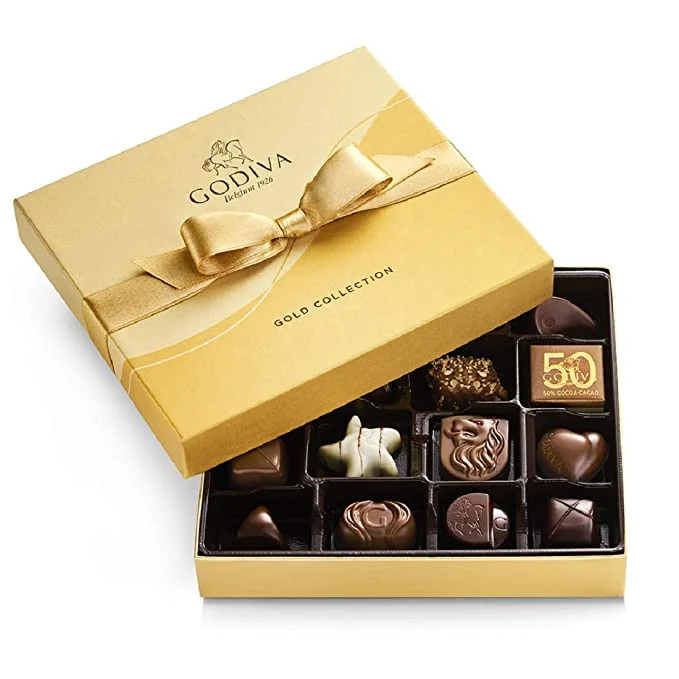
If you're selling a $40 box of truffles, the box is part of the product experience, but it's also part of the food-safety chain. A wholesale buyer's compliance team will treat it that way even if your Instagram audience never thinks about it. This guide walks the three contact layers you control, why each one matters, and the exact paperwork to demand so you don't fail a retailer audit six months after your first PO.
"Food-safe" is a legal spec, not a marketing word
Define the intended food and contact conditions before requesting compliance documents. A report for a different material, construction or use may not answer the chocolate pack’s requirements. Keep the dated regulatory scope and official references below, and have the responsible buyer confirm what evidence applies to the finished article.
When a supplier says a box is "food-safe," ask them what they mean by it — because the phrase has no fixed meaning on its own. In the US and EU, materials in direct contact with food are governed by food-contact regulations, and compliance is demonstrated with testing and documentation, not with a reassuring sentence in an email. The regulatory frame is "as of 2026"; specific rules, thresholds and test protocols change and vary by market, so treat any figure as illustrative and verify the current requirements for your selling markets with a food-contact compliance specialist or counsel.
The mechanism that matters to you as a buyer is simple: substances can move from packaging into food. That's called migration. Regulators care about it, buyers' QA teams care about it, and it's the reason "it looks clean and it's a nice board" is not an answer. What you want is a paper trail showing the specific board, coating, ink and adhesive were assessed for direct or indirect food contact — and used accordingly.
Rule of thumb: If a supplier can't tell you which layer is rated for direct food contact and produce documentation for it, treat the box as decorative packaging that needs an internal barrier — not as a food-contact container.
Four components to assess: board, liner, adhesive and ink
Draw the contact path through the complete pack. The chocolate may touch a tray, liner, insert or divider while ink and adhesive sit elsewhere in the construction. Identify those components separately rather than assuming that an outer-board description covers everything that can contact or affect the food.
The board
The rigid or folding paperboard shell. If the product touches it directly, the food-side surface has to be food-grade — printed decorative board usually is not.
The liner / insert
Glassine sheets, greaseproof cups, paper pads or blister trays. This is your cleanest path to compliance because it physically separates food from print.
The adhesive
The glue holding wrap to board or seams together. It's easy to forget, but adhesives are in scope too and must be food-contact safe where migration is possible.
The ink
What's printed on any surface facing the food. Inks are the layer buyers most often get wrong — more on low-migration formulations below.
The point of listing all four is that "the board is food-grade" doesn't clear you if a printed insert sits under the chocolates or a solvent-based adhesive is used on a seam near the product. Compliance is a property of the whole contact path, not one component.
Why you separate product from board — glassine, greaseproof and blister liners
Separating chocolate from decorative printed board is a useful design starting point. The liner or tray must itself be suitable for the intended food, and the complete pack still needs assessment for migration, odor transfer and manufacturing contamination.
Three common approaches, depending on the product:
| Separator | Best for | What it does |
|---|---|---|
| Glassine sheet or paper | Bars, clusters, loose pieces, layered assortments | Smooth, grease-resistant paper laid over or under the product so print and board never touch it. |
| Greaseproof cups / pleated cups | Individual truffles, pralines, filled chocolates | Each piece sits in its own food-grade cup, isolating it from the tray and neighbors. |
| Blister / plastic tray | Assortments needing a fixed grid, gift sets | A moulded tray holds each piece in a pocket; the food touches the tray, not the box. |
These separators can prevent direct contact with printed board, but their barrier performance differs. Select the specific grade and thickness for the chocolate, expected storage period and temperature, then request evidence for the assembled construction.
Food-grade paperboard and barrier/dispersion coatings on the food side
If food rests directly against the box surface, select a board and any coating authorized or otherwise demonstrated suitable for that exact use. Grease resistance and food-contact compliance are different properties, and a coating is not automatically a validated migration barrier.
What to actually specify: tell your factory the food-side surface must be food-grade board with an appropriate barrier/dispersion coating, and that you'll want documentation for that specific board-and-coating combination. Don't accept "the board is fine" — the coating and the substrate are assessed together, and a coating rated on one board isn't automatically valid on another.
Watch out: A beautiful uncoated art board can be perfect for the outside of a box and wrong for the food side. If cost pressure pushes the factory to use the same stock throughout, that's exactly where a liner or a food-side coating earns its keep.
The ink problem: why standard UV inks aren't for direct food contact, and what "low-migration" means
This is where a lot of otherwise careful buyers get caught. Standard UV-cured inks — common on rigid boxes because they cure fast and look sharp — are generally not suitable for direct food contact. UV inks cure through photoinitiators, and photoinitiators and unreacted monomers can migrate. If that ink is on a surface the chocolate touches, those substances can end up in the food.
There are two legitimate ways to handle it:
- A validated functional barrier. Keep print away from food and assess transfer through the materials, set-off and other relevant routes. A liner counts as a functional barrier only when its performance supports that conclusion.
- An ink and process suitable for the intended use. Low-migration formulations can be part of the design, but that description does not authorize direct food contact. Confirm substrate, curing, coverage and the evidence for the complete printed article.
Keep decorative printing on the outside where possible, choose a suitable contact layer and assess the assembled pack. Where print could contact food, obtain specialist confirmation of the formulation and process rather than relying on a low-migration label.
There is no single "FDA-approved ink" — how compliance is actually proven
An FDA reference must identify the substance and authorized conditions of use; it is not a universal approval of every finished printed box. FDA explains the possible regulatory bases and supplier guaranty. Ask the supplier to connect those bases to the actual materials and intended use.
Migration testing works by exposing the finished material to food or food simulants under defined conditions and measuring what, if anything, moves into it. The result is evidence that this board, this coating, this ink and this adhesive, used together the way your box uses them, stay within acceptable limits. That's why the paperwork is tied to a construction, not a component — and why swapping a "same-ish" ink or board mid-production can quietly invalidate it. Because protocols and limits change, treat specific test conditions as illustrative and confirm what your markets currently require with a food-contact specialist.
The document to demand: Certificate of Compliance / Declaration of Compliance
Request a construction-specific compliance statement and the supporting evidence required for the materials and market. A Declaration of Compliance has defined requirements for certain EU materials, including plastics, but there is no single universal certificate covering all paperboard boxes and inks. EU rules and the Commission overview explain the framework and material-specific differences.
Two reasons this is worth doing at the quote stage, not after:
Buyers now require it
Wholesale and retail buyers increasingly demand this documentation on file. Specifying it up front means you pass their audit instead of scrambling after a PO.
It locks the spec
A CoC tied to named materials makes silent substitutions visible. If the doc doesn't match the box, you have leverage before the goods ship.
It's cheaper early
Sorting materials and documentation before tooling is far cheaper than re-running production because a buyer rejected an undocumented box.
It's market-specific
Requirements differ by selling market. Tell the factory where you sell so the compliance path matches — and verify current rules with a specialist.
Spec sheet template to send your factory for a confectionery box
Copy this into your next RFQ. It turns a vague "food-safe box" request into something a factory can quote and document precisely:
- Product & contact: "Chocolate/confectionery, direct contact with [liner only / food-side board]." State exactly what the product touches.
- Separation layer: "Include [glassine sheet / greaseproof cups / blister tray], food-grade." Specify one so it isn't quietly dropped to save cost.
- Board, food side: "Specify the exact board and any coating needed for the intended food and contact conditions; validate any claimed migration barrier."
- Ink: "Identify ink formulation, printing position and curing process; provide evidence appropriate to the intended contact and migration conditions. A low-migration designation alone is not direct-food-contact approval."
- Adhesive: "Food-contact-safe adhesive where migration to product is possible."
- Documentation: "Identify the legal basis, material grades, intended food, contact time and temperature. Provide the required declarations, supplier statements and supporting test or assessment data for our selling markets."
- Sample: "Pre-production sample of the exact construction for our own check before mass production."
That last line matters. A pre-production sample of the real construction — real board, real liner, real ink, real glue — lets you (or your buyer's QA) confirm the box in hand matches the paperwork before you commit to a full run.
Want a food-contact-safe box, documented?
Send your chocolate or confectionery specification, contact conditions and target markets. Confirm material suitability, sampling scope and available supporting documentation before approving production.
Frequently Asked Questions
Can chocolate safely touch a printed rigid gift box?
Not unless that specific printed surface is documented as food-contact safe — and standard printed decorative board usually isn't. The reliable practice is to separate the chocolate from the printed board with a food-grade liner, greaseproof cup or blister tray so the product never touches the print. If you do need the product resting on the box surface, that surface must be food-grade board with an appropriate barrier coating and supporting documentation.
Do I need a glassine or greaseproof liner inside a chocolate box?
A suitable liner can prevent direct contact with printed board, but glassine, greaseproof paper and blister trays are not interchangeable barriers. Confirm the specific material and complete pack for the food type, storage period and temperature.
Are the inks on my gift box food-safe?
Not automatically. Ink chemistry, curing, print location and the full construction affect suitability. Keep print off direct-contact surfaces unless that use is specifically supported, and assess migration even where a liner separates the food from the print.
What is a Certificate of Compliance and should I ask my factory for one?
Ask for a statement tied to the exact materials and intended conditions of use, together with the supporting evidence required in the selling market. The name and legal requirement of the document depend on the material and jurisdiction; a generic certificate does not approve every construction.
Is there such a thing as FDA-approved food packaging ink?
There is no universal FDA approval stamp for every use of a printed box. Components must have an appropriate regulatory basis for their intended use, and any limits or manufacturer-specific authorizations must be respected. Ask which basis covers the actual ink components and conditions.
LuxoPacks manufactures custom gift boxes in Dongguan, Guangdong. Discuss the contact-material requirements and documentation available for the proposed construction before order approval. Related reading: Custom Gift Boxes: A Buyer's Guide, Luxury Packaging Finishes Guide, Print-Ready Artwork & Dieline Guide, Chocolate packaging solutions.
Put this guide into practice
Match each supplied document to the named material, contact conditions and destination. Approve the final layered construction only after its food-contact responsibilities and evidence gaps are resolved.