Luxury Packaging Factory · FSC & ISO 9001
Free 3D Mockup
Discuss Project on WhatsApp Request Custom Quote
Branded Fulfilment
The Last Ad Your Customer Sees Before the Product
Compare right-sizing changes against the whole pack. Reducing height may change void fill, closure pressure and the carrier's dimensional-weight calculation, while a more complex lock can add labour. Keep branding clear of shipping labels, tape and handholds. Decide whether the box travels as the outer parcel or protects an inner presentation box, because those are different jobs even when their external dimensions look similar.
Have the intended operator erect, fill, label and close the sample. Inspect product movement, corner support and label readability. Use actual carton dimensions and gross weight for a freight comparison; do not infer delivery cost from box volume alone.
Underneath the print it's still a working shipper: regular slotted container (RSC) construction, board specced by edge-crush test against your parcel weight and courier route, and auto-lock bottoms that assemble in one motion on the pack line.
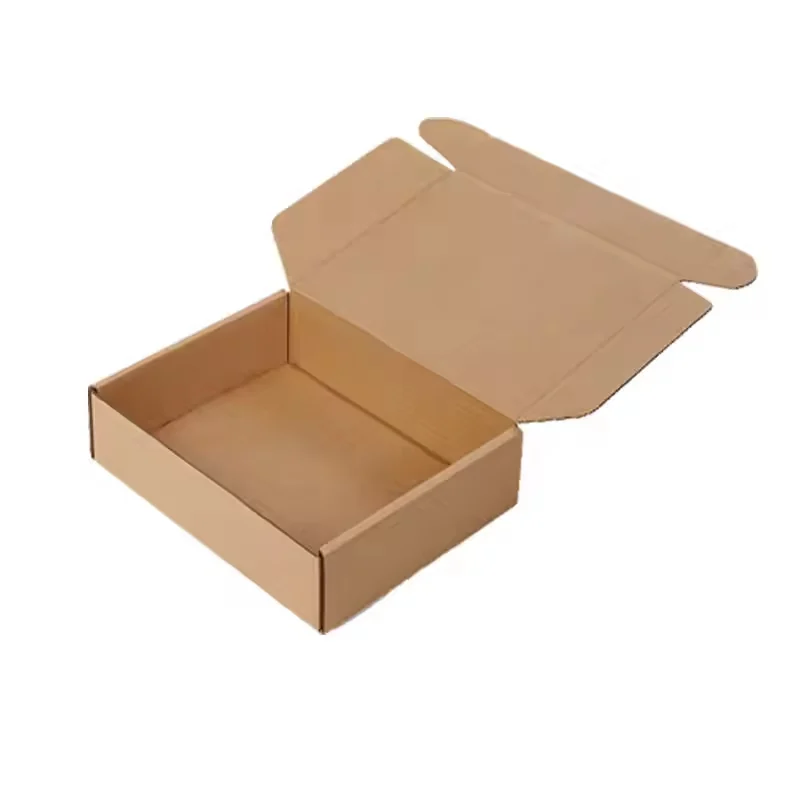
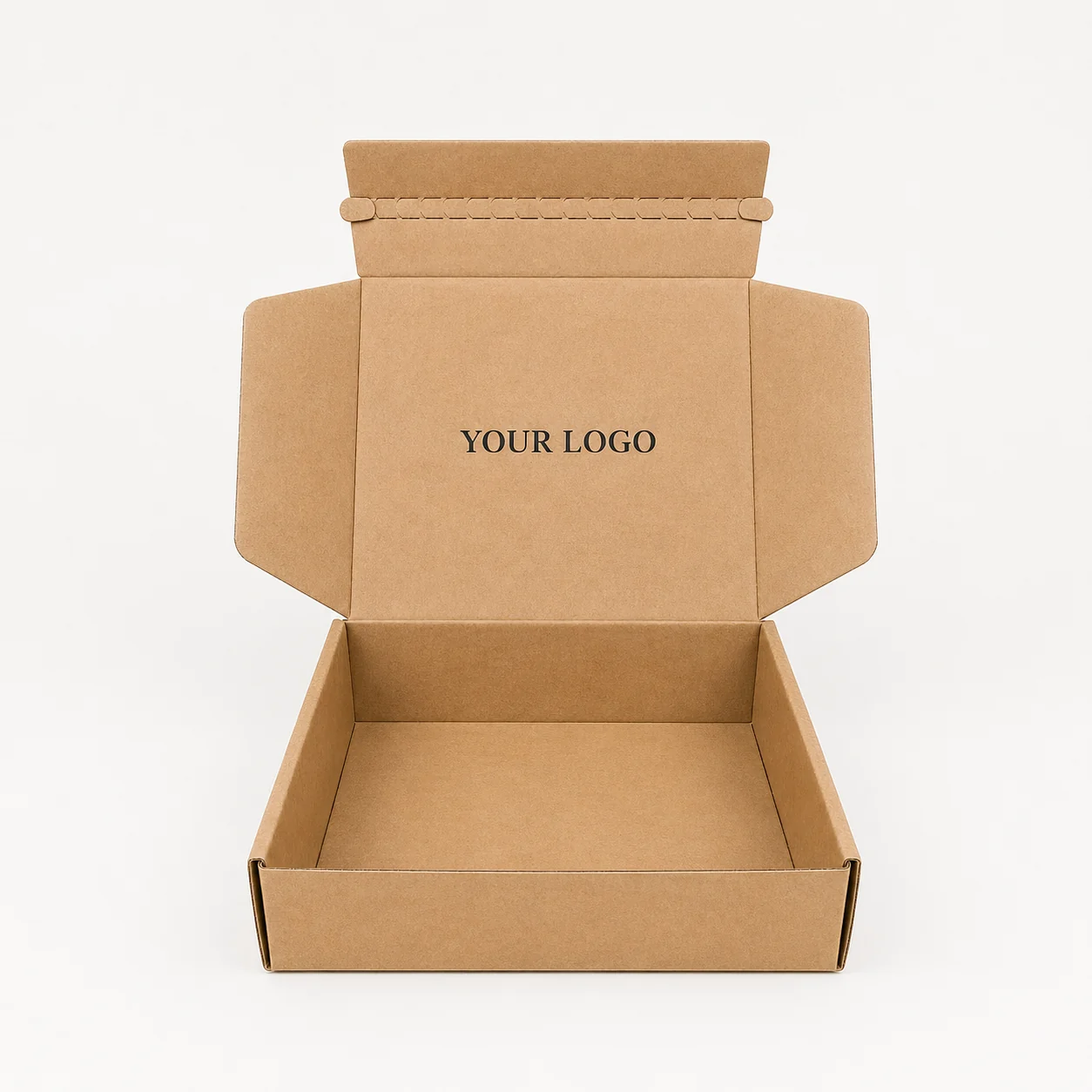
Kraft-with-black is the budget hero; white boards carry full colour. For product-facing boxes see corrugated product boxes; for tear-strip openings see the kraft mailer.
Technical Specs
Specifications & Parameters
Configure your branded shipper:
| Parameter | Options & Guidance |
|---|---|
| Construction | RSC (regular slotted container); auto-lock bottom option |
| Board | B or EB-flute, ECT-specced to parcel weight and route |
| 1–2 colour flexo on kraft; full-colour on white liner; interior print option | |
| Sizes | Fully custom; courier-dim-weight optimised on request |
| Closure | Tape-line graphics, self-seal strip option, tamper print |
| Sustainability | FSC board and water-based ink options; confirm the order claim, complete construction and destination recycling acceptance |
| Minimum Order | 500 pcs per design and size; final specification recorded in the quotation |
| Sample Lead Time | 3–5 days after specification confirmation; shipping time additional |
Bespoke Options
Shipper Options
Working details for fulfilment lines:
Auto-Lock Bottom
One-motion base assembly for pack-line speed, qualified with the real product weight.
Interior Reveal Print
Brand message inside the lid greets the customer at opening.
DIM-Weight Review
Compare external dimensions, protective clearance and current carrier rules before approval.
Tamper-Evident Print
Security patterns along tape lines expose reseal attempts.
Buyer Answer
How Should a Branded Shipping Box Be Right-Sized?
Short answer: Size the shipper around the packed product, protective clearance and the carrier's current billing rules. A smaller box can reduce dimensional weight and void fill, but removing cushioning without validating the packed product can increase damage. Compare actual and dimensional weight for the intended service, then test the printed production structure with its real contents.
Freight and Protection
Right-Size Without Turning Damage into the Hidden Cost
FedEx explains that dimensional weight relates occupied space to actual weight and that the greater chargeable value can apply. Its published U.S., Puerto Rico and international example uses cubic inches divided by 139, but carriers, contracts, countries and services can use different factors. Treat the divisor as a current-route input, not a permanent box specification.
Build the quote from the product outward: packed orientation, vulnerable faces, minimum protective clearance, closure and label zones, then calculate the external dimensions of the converted box. Record both actual and route-specific dimensional weight. If the product, package material, insert, closure or distribution system changes, use ISTA's change-and-retest principle to decide whether the previous approval still applies.
- Separate primary product protection from presentation graphics.
- Reserve flat label and barcode zones before artwork approval.
- Test the finished print and joint, not an unprinted hand sample alone.
- Compare damage cost, packing time, void fill and dimensional charge together.
Shipper Decision
Match Box Style to Fulfilment Work
| Structure | Useful when | Approval focus |
|---|---|---|
| RSC shipper | Efficient case production and conventional packing lines | Joint, tape zone, flap gap, compression and label placement |
| Die-cut mailer | DTC presentation and faster self-locking pack-out | Lock engagement, dust flaps, opening force and dimensional efficiency |
| Auto-bottom shipper | Packing speed matters at repeat volume | Bottom lock under product weight, glue bond and line handling |
RFQ Checklist
Inputs for a Shipping-Box Cost and Damage Review
- Product dimensions, packed weight, orientation and vulnerable surfaces.
- Destination countries, carriers, services and current DIM-weight rules.
- Monthly volume, pack-out speed, storage and pallet or parcel route.
- Void-fill or insert material, closure, returnability and tamper requirement.
- Print coverage, barcode/label zones, damage tolerance and test evidence required.
Worked right-sizing example
Suppose a product fits into a shorter shipper after a void-fill redesign. Recalculate the external converted dimensions, actual packed weight and the current carrier-specific dimensional weight before declaring a saving. Then compare packing time and protective performance with the old configuration. A smaller cube that needs slower assembly or produces more damage can cost more overall, while a modest reduction that preserves corner and face protection may improve both freight and material use. The approval record should identify the product revision, insert or void-fill, box style, board construction, joint, closure, label zone, carrier route and test criteria. If any of those change, the previous result is evidence for comparison, not an automatic guarantee for the new pack.
For multi-market programmes, keep the box drawing separate from the carrier calculation sheet. The physical structure can remain common while the chargeable-weight calculation changes by service or contract. Recording date, carrier, service, units and divisor on the calculation prevents an old rate rule from becoming a permanent packaging claim. Review that sheet before each launch or major freight tender.
Include the packed sample's measured external dimensions in the approval record because scoring, board thickness and closure can make them differ from the inside-size calculation used at quotation.
Procurement & Budgeting
Quantity Tier & Pricing Benchmarks
Indicative ex-works tiers for a 300×220×120mm B-flute RSC, 1-colour kraft print:
| Quantity Tier | Indicative Price (USD / EXW) | Recommended Use Case |
|---|---|---|
| 500 Pcs | $0.55 – $0.90 | Growing e-commerce fulfilment |
| 1,000 Pcs | $0.42 – $0.62 | Standard monthly volume |
| 3,000 Pcs | $0.34 – $0.48 | Multi-SKU programs |
| 5,000+ Pcs | $0.30 – $0.40 | 3PL and marketplace volume |
Earlier reference scenarios below the current 500-piece minimum (not available for ordering)
These original quantity and price references are retained for comparison. They are not current order options or quotations. Do not apply a lower-volume price to a different quantity.
| Quantity Tier | Indicative Price (USD / EXW) | Recommended Use Case |
|---|---|---|
| 300 Pcs | $0.75 – $1.80 | DTC launches, subscription waves |
*Prices are ex-works (EXW) and vary with paper grade, dimensions, ink coverage, and finishing. Confirm tooling ownership, storage, reuse charges and any setup waiver in the written quotation; repeat orders still follow the current production minimum.
Target Industries
Where Branded Shippers Pay Back
Formats by fulfilment model:
DTC & Subscription
Doorstep brand impressions plus interior reveal print.
Marketplace Sellers
Stand-out-from-the-brown for premium marketplace positioning.
Export Consolidation
EB doublewall options sampled for the planned pallet, sea-freight and destination route.
3PL Programs
Auto-lock bases and stable dielines for high-speed third-party lines.
Questions
Frequently Asked Questions
What is dimensional weight?
It relates package space to weight; carriers can charge the greater of actual or dimensional weight, using rules that vary by service, market and contract.
How do I right-size a shipping box safely?
Build outward from the product and minimum protective clearance, calculate current route costs, then compare damage, packing time and material with a packed sample.
Should I use an RSC, mailer or auto-bottom box?
Use an RSC for conventional case packing, a die-cut mailer for DTC presentation, or auto-bottom when pack-out speed justifies its structure and sampling.
When should a shipping pack be retested?
Review the evidence when the product, dimensions, board, insert, closure, packed weight or distribution system changes.
What inputs are needed for a branded shipper quote?
Send product size and weight, route and carrier, volume, packing method, protection, closure, label zones, artwork, damage criteria and required test evidence.
Instant Inquiry
Request a Factory-Direct Quote
Provide the complete pack-out, fulfilment method, destination and carrier constraints. Request proposed board, closure and carton data alongside the print specification.
Email info@luxopacks.com or message us on WhatsApp with your packaging brief.
Continue Your Sourcing Research
Related Products & Buyer Guides
Related Products
- Eco-Friendly Packaging Range
- Custom Fast Food Packaging Set
- Custom Corrugated Boxes
- Custom Corrugated Mailer Box With Tear Strip
- Recycled Kraft Mailer Box Tear Strip
- Custom Folding Carton Boxes